SUMMARY
In this case an 18 ct red gold piece s examined, whose surfaces were evidently rough, with defects that looked like hard spots. But they were not hard spots, but abrasive particles stuck onto the material during polishing phase.
PROBLEM
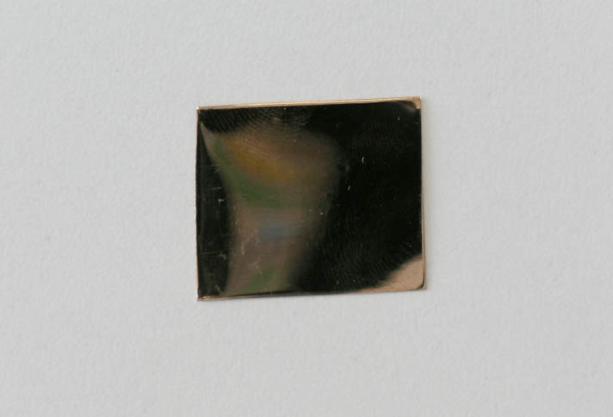
In the case at issue, a sample taken from an 18 ct red gold watchcase was examined, whose surfaces were rough and sandy (Next Figure).
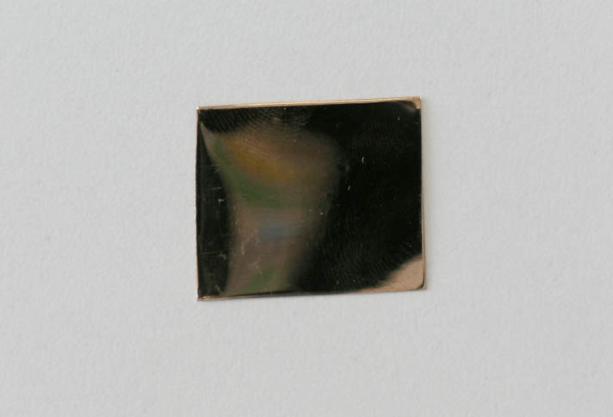
The watchcase was produced starting from a 8 mm thick continuous casting bar that was correctly wrought, stamped, annealed and then pressed. The defects came to the surface only after final polishing phase.
The sample taken for the analyses was observed under the scanning electron microscope to determine the nature of the defects. As you can see on the next figures, some inclusions of rather squared and slightly irregular shape are incorporated onto the surfaces of the sample. Close to these inclusions the so-called "comet effect" is evident, i.e. scratches that follow the direction in which polishing occurred.
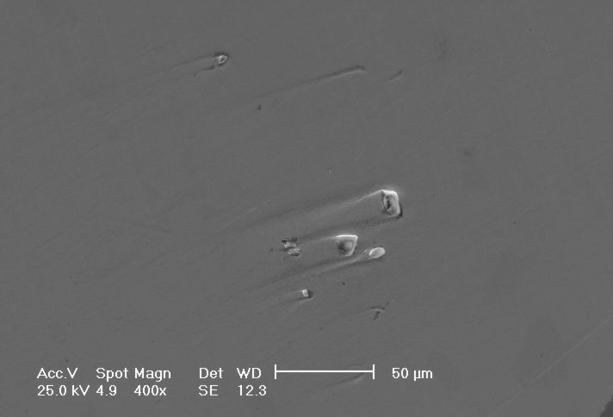
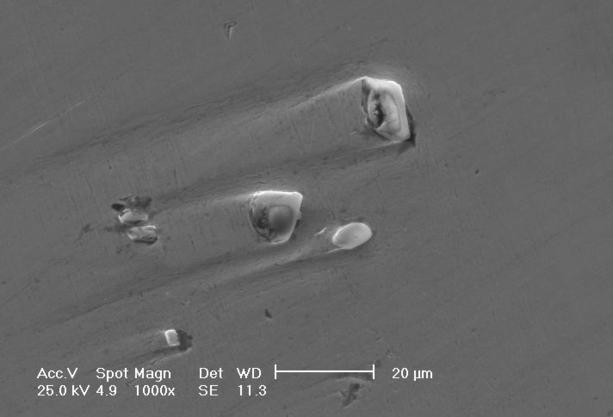

An analysis of the chemical composition of those particles outlined the presence ox oxygen and aluminium (Next Image). Oxygen and aluminium, combined, constitute alumina, i.e. a material commonly used in abrasive papers/pastes sold for polishing jewelry.
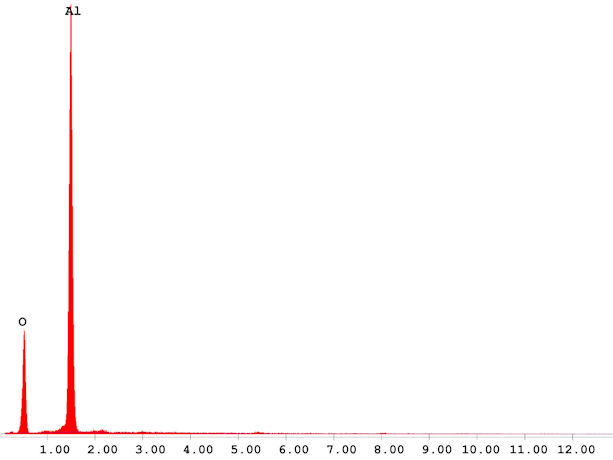
Considering the morphology of the defects, the fact that they were always with the comet effect and the outcome of microanalyses, it was clear that the surface inclusions were caused by the polishing phase. Dealing with wide and flat surfaces, probably the operator was not able to unload all the abrasive material required for final polishing and then some particles remained included onto the samples' surfaces.
Usually, this kind of problem affects soft materials such as sterling silver (in that case, considered the low hardness of silver alloys it is easy to understand how some abrasive particles may stick onto the surfaces), but it is not the first time it affect other types of alloys as well.
SOLUTION
The solution to problems deriving from polishing phase consists in paying close attention to the abrasive papers/pastes used:
- High quality materials should always be bought, as they do not release excessive quantities of particles that may be included onto the material;
- It is important to check that the abrasive used are compatible with the material to polish: e.g. products suitable for finishing 18 ct yellow gold are not suitable for polishing silver alloys (in case, as for suggestions to your own supplier);
- In case, it is possible to try and carry out a hardening heat treatment before the final polishing, so to increase the hardness of the material and prevent abrasive inclusions.