SUMMARY
In the everyday practice a goldsmith operator has to pay attention to several details and parameters, to succeed in creating items without defects. We report some examples of common problems faced in the goldsmith’s field.
PROBLEM
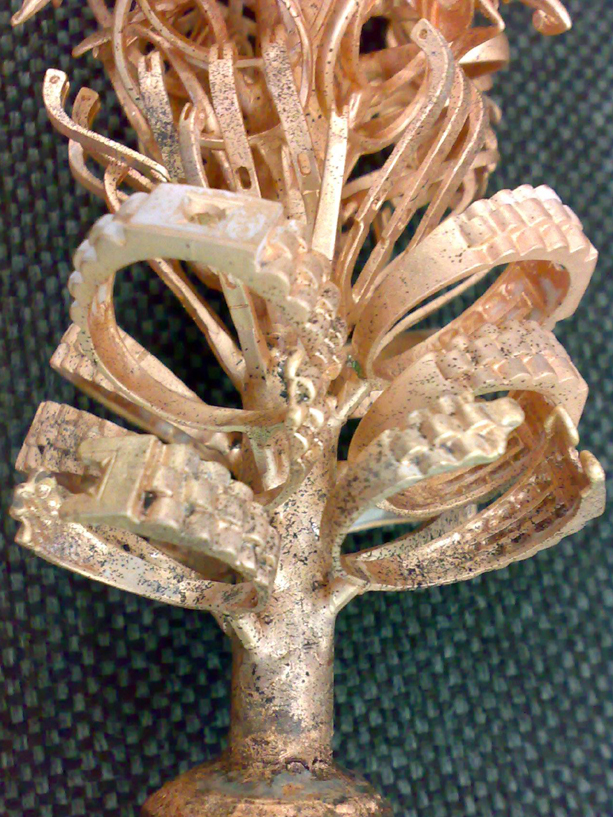
A customer complained the presence of defects in a 14ct red gold alloy. In particular, he complained the presence of superficial dark spots on the items.
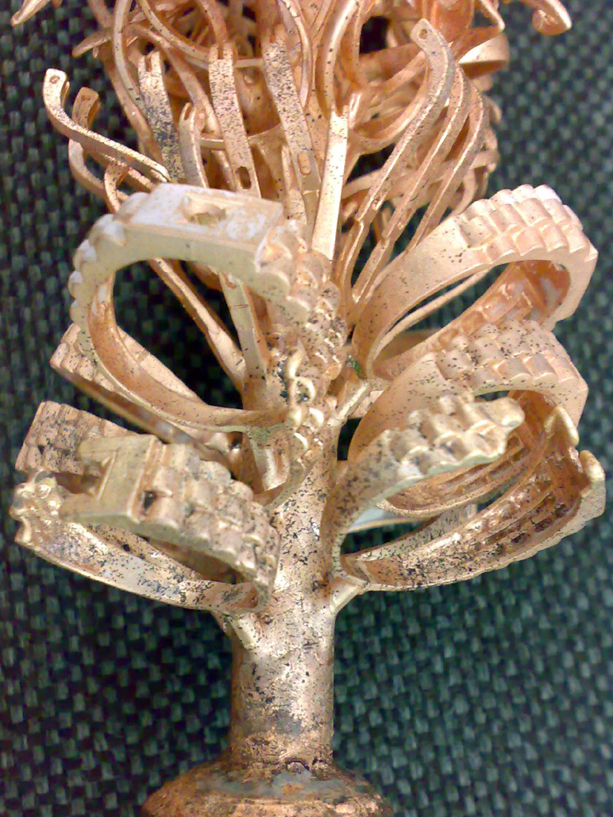
From a thorough observation of one of the trees affected by the defect, some hypothesis about the problems causes came out. Since the master alloy used was studied on purpose for investment casting processes and the for obtaining deoxidized casts, the most probable hypotheses were two: first, the wax residuals may have not been completely removed during flasks' burnout cycle; secondly, the pouring temperature may have been kept too high.
SOLUTION
To eliminate the found out defects, it is right to:
- check that during burnout cycle the wax is completely eliminated; in particular, it is possible to increase the maximum burnout temperature (if, for example, the temperature is kept at 730°C, you may increase to 740°C, up to a maximum burnout temperature of 750°C) and prolong the time the flasks stay at that temperature. This guarantees a better elimination of the carbonaceous residuals coming from the wax, which usually remain on the investment surface;
- use a proper casting temperature, according to the information reported on the alloy's technical datasheet, as an excessive casting temperature favours decomposition phenomena of investment and a possible development of the examined defect.