SUMMARY
In silver alloys, the proper flasks’ quenching after casting is a way to obtain castings without surface spots due to fire stain. In fact this phenomenon takes shape from the contact between the heat metal and oxygen in the instants next casting.
PROBLEM
A 925 silver manufactured article produced by investment casting is examined. It is affected by the presence of black colored surface stains.
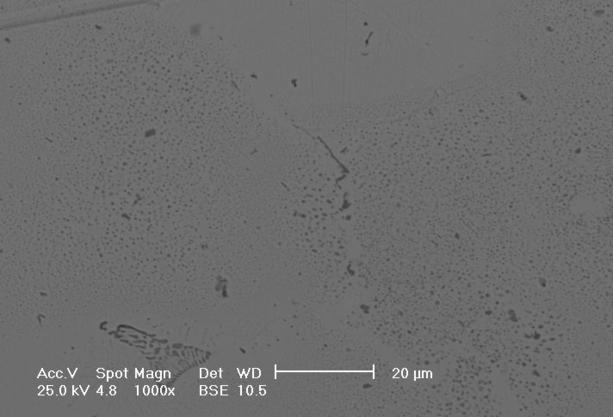
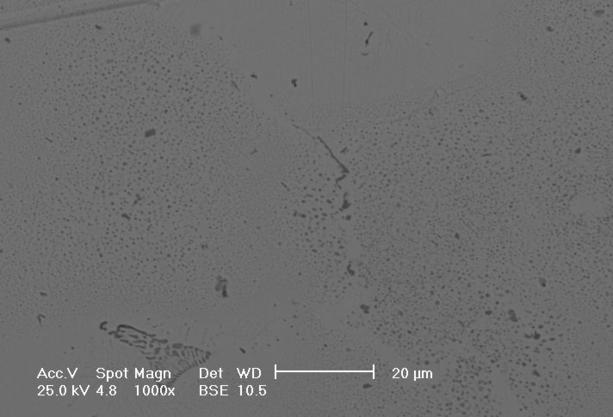
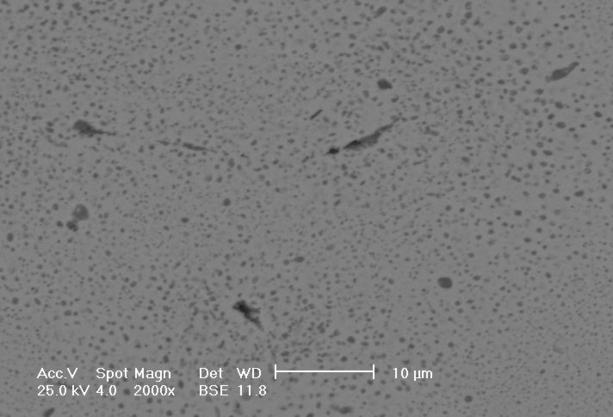
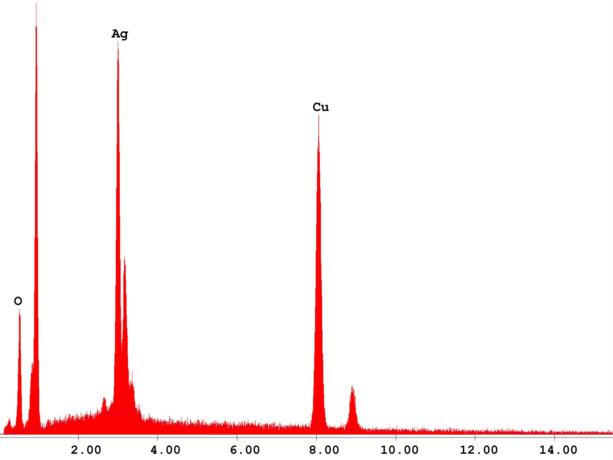
By means of the electron microscope, a surface rich in black spots is visible. The black areas are clustered into formations that look like clouds. They display the typical morphology associable with fire stain problems (First two Figures). A chemical analysis carried out on the black areas, aimed to determine their composition, outlines that they are rich in copper and oxygen. This confirms that it is a matter of fire stain, that is a preferential oxidation of the phase rich in copper of the alloy.
This kind of oxidation takes place at high temperatures, that is when, after casting, the metal gets into contact with the oxygen present in the air. Therefore, it is recommendable to keep the flasks the less the possible in contact with the air in the first minutes after casting.
SOLUTION
As told in advance, to avoid the development of fire stain phenomenon it is fundamental to reduce the times of stay in the air of the just cast tree. For this reason, it is recommendable to keep the flask inside the vacuum chamber of the casting machine for 2 (maximum 3) minutes before abruptly quenching it in water. The time of wait depends on the weight and size of the cast items: in particular, thin items can be quenched after 2 minutes, while heavier ones after 3 minutes.