SUMMARY
The quality of the finish of silver alloys, as well as of the golden ones, depends much on superficial hardness of the alloy. During casting the alloy comes into contact with other materials such as the graphite of the die in the continuous casting, and it can carry with it some little particles of these materials. They remain included in the alloy till the final part of the working when, during polishing, they re-emerge to the surface. Therefore the problem is rather assignable above all to the first phases of preparation then to the following working steps.
PROBLEM
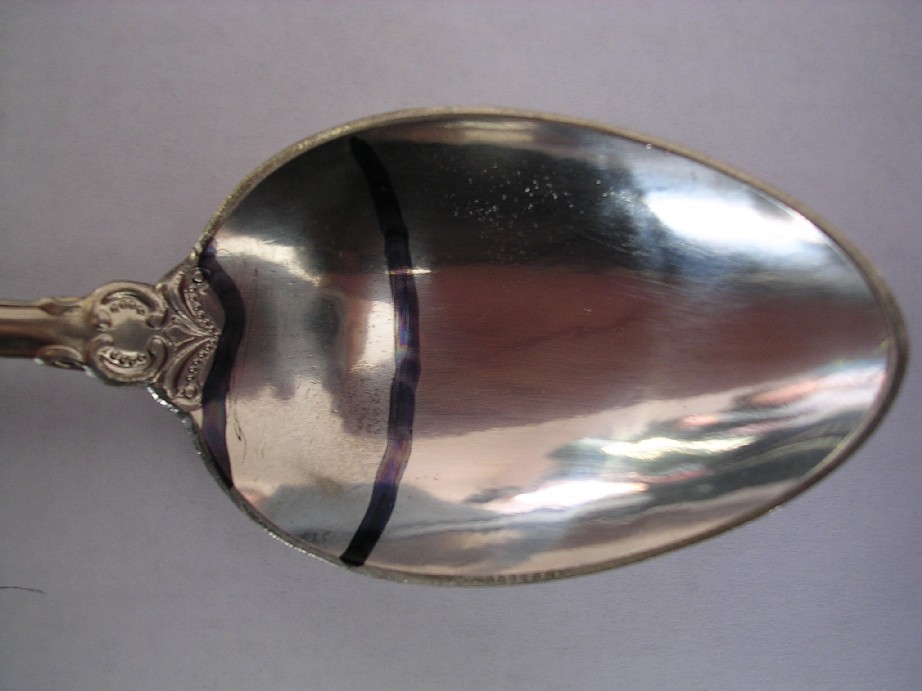
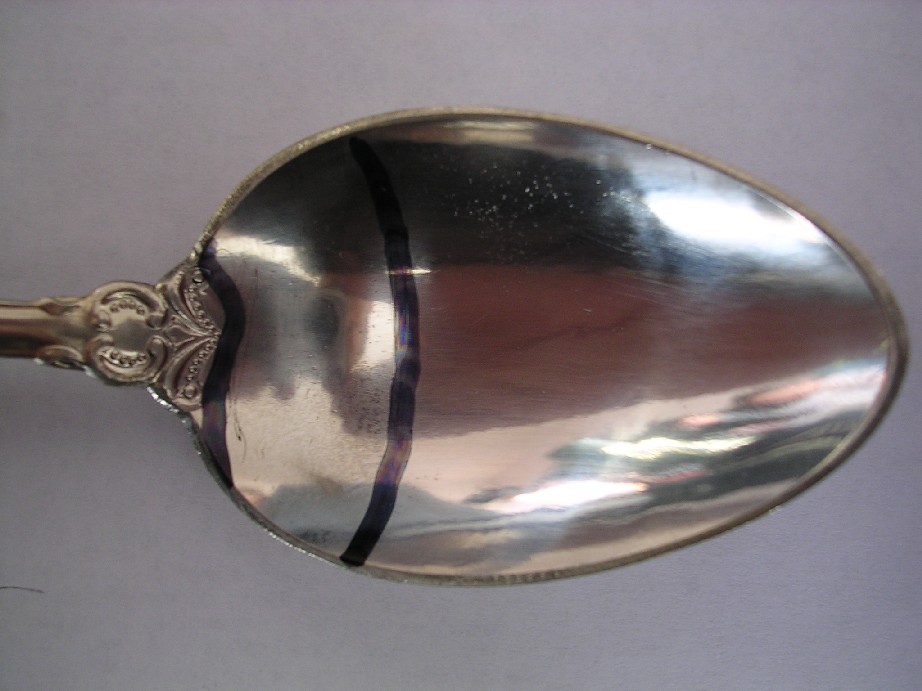
In the case we're going to examine a problem (marked in figure 1) caused by some graphite fragments that, incorporated inside the ingot during the casting, were brought by the alloy itself both during the rolling of the plate and the final phase when the spoon was stamped.
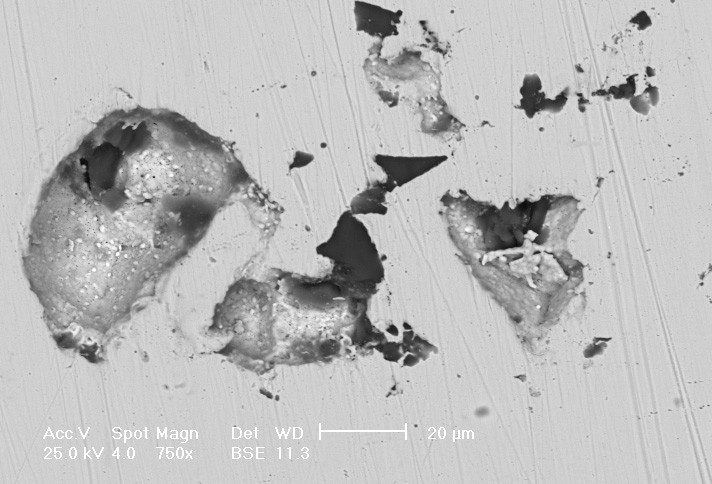
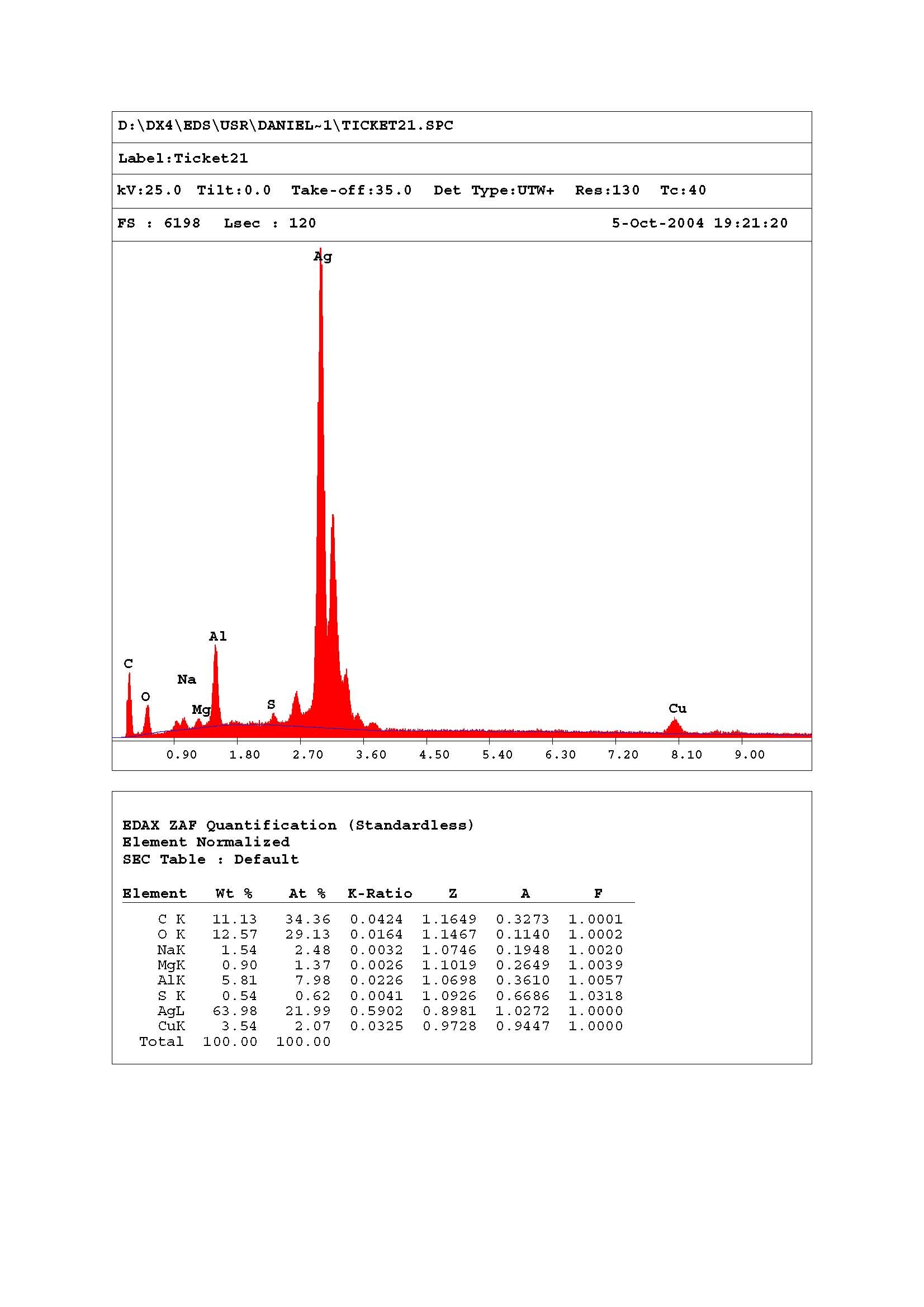
During the continuous casting the alloy, while creeping on the graphite die, picks up some little portions of this material. If immediately after the casting we proceed by rolling without a proper polishing, these inclusions rise up to the surface during the final polishing by causing the imperfections at issue. Therefore the defect will be caused to the inclusions which aggregated to the alloy during casting and it will appear under the shape of foreign bodies stuck on the surface, little holes left by these foreign bodies and/or scratches in the surface following the polishing direction (refer to the magnification in figure 2). We can make us sure of the causes of this defect through a dot-like analysis: in the spoon case we found the presence of Carbon traces, as you can see in the spectrum analysis of figure 3.
 SOLUTION
In order to obtain mirror surfaces, we suggest you to pay attention to the casting and to carry out a careful polishing after this phase.
- Try to avoid rolling immediately after casting. It would be better carrying away by working for carrying away in chips, the more external part of the surface (ca 0.2-0.4 mm), so the one in direct contact with the other materials of the die and of the mould.
- If the starting removal is not possible, we suggest you to make a hand pre-finishing using abrasive papers, even if this will not assure the removal of all the "polluting" particles, since they can be very well stuck on the surface. After this polishing