SUMMARY
The contamination of the material by impurities may provoke the rise of different problems, such as for example the formation of hard spots. This kind of pollution may derive from the raw materials (and therefore it is fundamental to turn to trustable and certified suppliers) or the production process you are used to follow. In this second case the pollution may come for example from the working tools (crucibles, stoppers, dies, mixers) or contaminations with other alloys.
PROBLEM
Some 18 ct red gold pieces produced by investment casting are examined. On their surfaces some spots in relief can be observed.
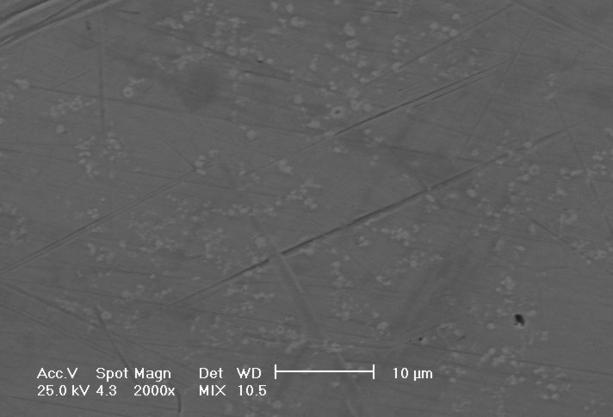
Under the electron microscopes some small sized spots can be noticed, that gather to form some stains. These stains are the defects in relies visible to the naked eye. The chemical analysis carried out on the surface outlines that the spots observed are mainly composed by iridium, chromium and iron.
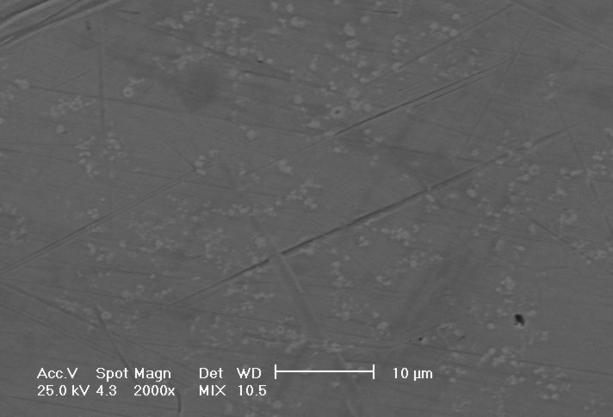
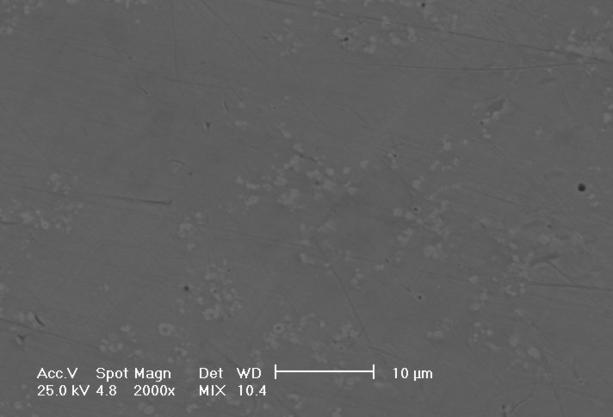
We think that these elements (iron and chromium) have segregated the grain refiner of the master alloy, causing the formation of the observed hard spots (it is important to emphasize that sometimes it may occur that together with the appearance of hard spots, also a non refined structure may be observed, due to the concentration of grain refiner contained by the above cited hard spots).
Chromium and iron are two elements that are not contained in ProGold master alloys and for this reason they must be introduced in the alloy from other sources. A possible pollution source may come from the raw material, for example in the case low quality gold or contaminated scraps are cast.
But the pollution may derive from the production process as well. In particular, the problem may be due to the fact that the molten metal got into contact with surfaces with insufficient chemical inertia at high temperature, that would release some polluting particles into the material.
SOLUTION
To solve this kind of problem, it is important to pay close attention to the use of high quality raw materials. For this reason to always use 999.9 mill. fine gold (possibly coming from electrolytic refining) is fundamental. In addition, always aiming to limit the possible pollution of the material, it is important to pay attention to the scraps reuse; in fact they should be carefully cleaned before casting, possibly by means of an ultrasonic action, in particular if they come from the chip removal working processes (but it is advisable to avoid using this type of scraps, as they contain some small quantities of the material constituting the items).
In the end, it is recommendable to make sure that the materials that get into contact with the molten metal (crucibles, mixers etc.) are made by high quality graphite. In fact graphite guarantees an excellent resistance against high temperatures and then the release of particles is very low. Anyway, all the tools should be periodically replaces, as also the wear may influence the release of polluting particles.
In the case at issue, we think that the pollution is imputable to the pulling bar of the continuous casting. It is fundamental that the precious metal in contact with the pulling bar is refined and not reused, as it may easily contain a high concentration of iron and other typical elements of steel materials. If the precious material is removed from the bar by casting, a separate crucible (for this purpose only) should be used, instead of the usual crucible used in the daily production.