SUMMARY
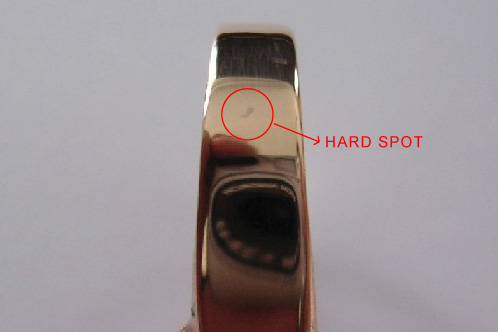
In this specific case study was examined 14ct red gold, where the alloy used contained Silicon and grain refiner purposely set. In the first castings this red gold displayed a good quality but then, once the castings number increased, it showed a problem which can be easily seen in Picture 1.
PROBLEM
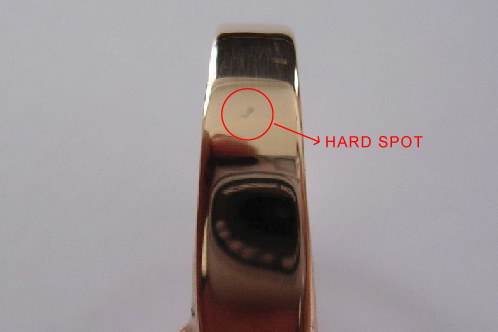
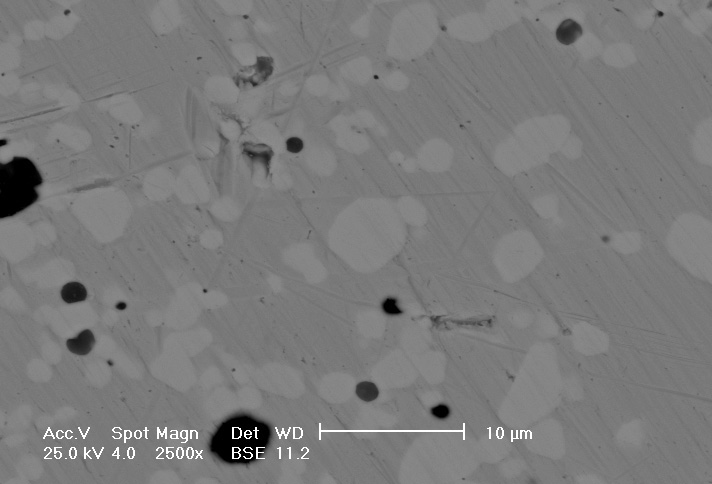
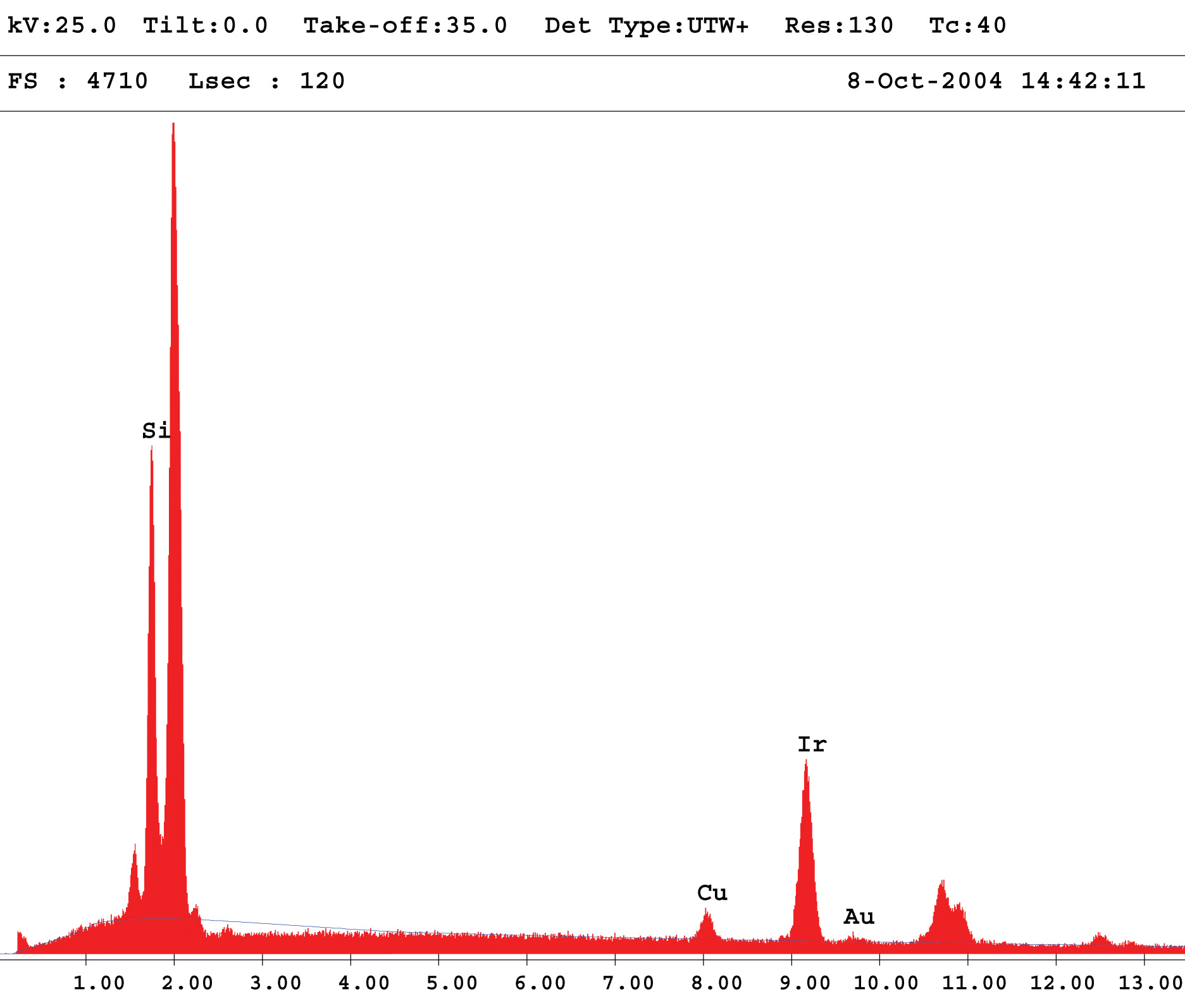
In this case, the surface of the piece was excellent when fresh metal was used, the further use of scraps made possible the problem to arise as it can be seen in Picture 2 after some castings. To be more specific, the operator used to melt the scraps adding new metal at a temperature of 1100°C in the following proportions: 50% new -50% old, 60% new- 40% old, this process was carried out for five days long, to send everything then to refinery. The phenomena, once analyzed, turned out to be a Silicon- Iridium agglomerate and the alloy used contained both these elements. The factors favouring this agglomeration should be connected to working causes, which to our opinion might not be appropriate for the typology of the product used, this last one in fact seems to be more delicate in presence of impurities and an incorrect working process, if compared to an alloy containing only Silicon and not grain refiner at all.
SOLUTION
- Try to do a pre-melting at lower temperatures, if in this case the melting temperature was 1100°C it would be advisable to decrease it at least of 60-80°C even up to 100°C less to provide less energy to the system, especially due to the fact that this energy contributes to the formation of the intermetallic compound between Silicon and Iridium contained in the alloy.
- Verify the quality of the scraps used (oxidation stage and polishing) is the best the possible, when the process produces unclean and oxidated scraps. This last one is a variable which influences the formation of agglomerates and intermetallic compounds, therefore polishing must be carried out very carefully.
- The number of the recastings has to be set according to each situation, a condition that in the case examined was too much daring and it would be better to reduce the number of reusage.