SUMMARY
The tools used by the goldsmith in his everyday practice are possible sources of pollution of the metal. Then, crucibles and mixers, together with the alloy used for casting, have to be duly checked with constancy and attention, to avoid the formation of undesired compounds on the final items’ surfaces.
PROBLEM
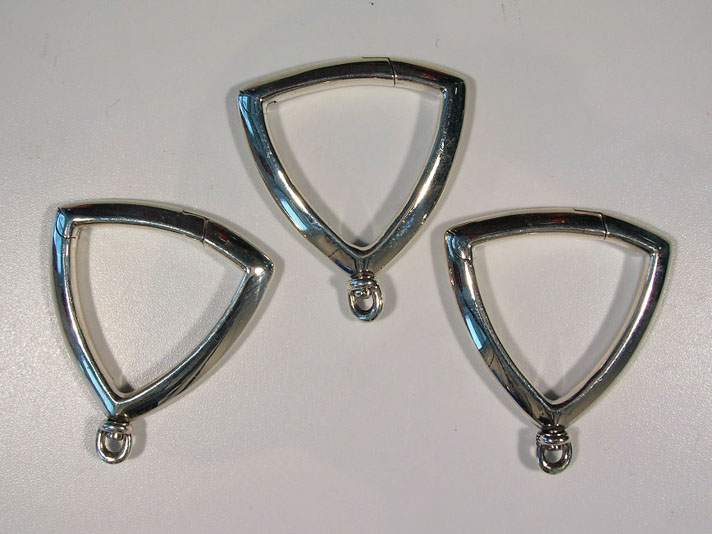
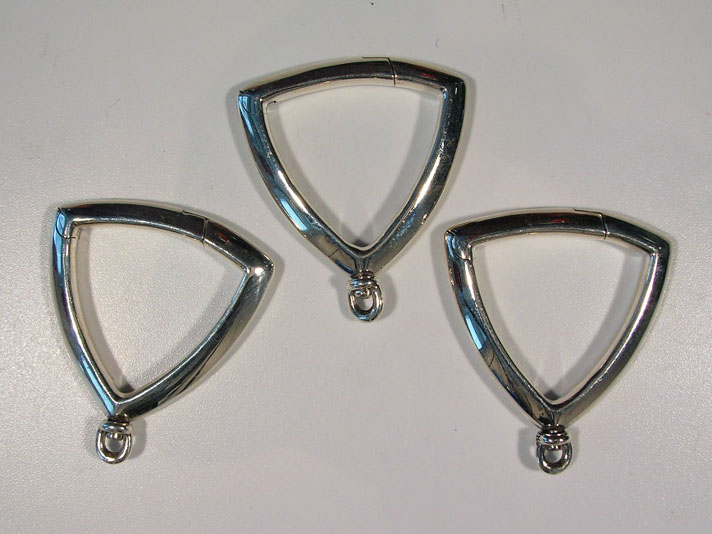
Some silver samples (First Photo) were affected by some superficial defects similar to hard spots.
A deeper analysis confirmed the presence of hard spots on most of the samples surfaces. Besides, we carried out a series of microanalysis to determine these hard spots' chemical composition.
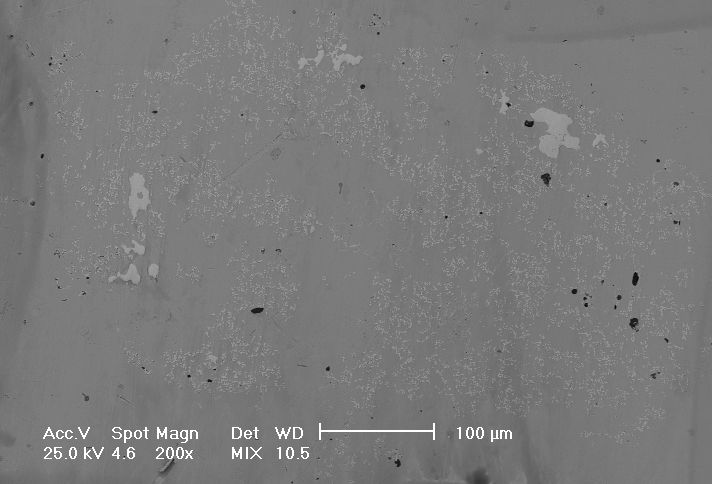
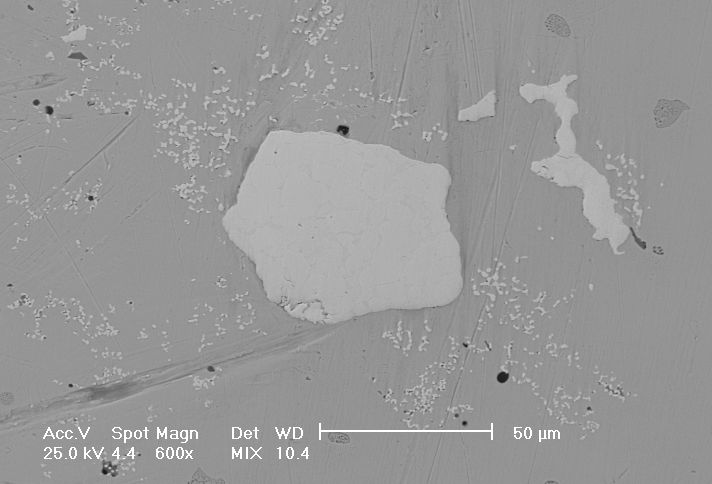
The hard spots found out the surfaces had a size embedded between 50 and 200 micron and they were surrounded by a series of lower-size spots. The microanalysis pointed out the presence of silicon, iridium and iron aggregates (Next figure).
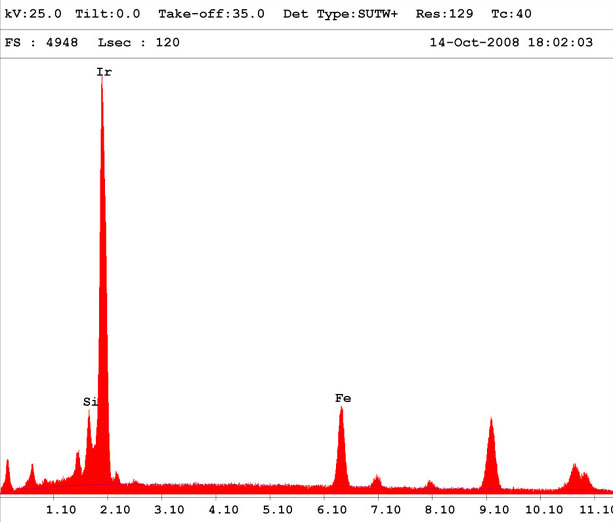
The formation of hard spots was probably due to a reaction between the grain refiner contained in the master alloy (in that case, iridium) and some polluting elements (silicon and iron), not contained in the master alloy itself. This reaction leaded to the formation of the hard intermetallic compound, commonly known as hard-spot, which usually comes to the surface after the brushing and polishing phase - since these are not sufficient to remove it.
SOLUTION
To solve this kind of problem, following advices could be useful:
- Avoid the use of crucibles made of silicon carbide and prefer, when possible, isostatic graphite crucibles.
- The crucibles and the items which get into contact with the molten metal (such as the mixers used to stir the alloy) should be made of graphite and used for a only alloy; so, it would be better to avoid the use of the same crucible for two different alloys, to prevent from possible pollutions.
- Use silver with minimum guaranteed purity of 99.99%, so to avoid the possible introduction of polluting elements, which could be contained in a low quality silver.
- If possible, avoid the use of scraps, above all of those coming from mechanical working, filing, and everything involving the pollution of materials containing iron/silicon. In case this was not possible, an accurate cleaning of the scraps is recommended, before their use; a quantity over 30% of scraps should not be used, as well.
- The scraps should not be used for a too long time; it would be better to periodically refine the whole material, so to not cumulate too high percentages of pollutings, which may cause defect similar to those described above.