SUMMARY
Hot tearing phenomenon is rather a frequent defect in investment casting processes. In particular, this breaking mechanism is helped, besides by elements foreign to the original alloy’s composition, also by technological factors regarding the production method. En excessive reuse of scraps could certainly be dangerous not only from the point of view of the superficial quality, but also for the obtainment of entire and resistant items, but “hard pushed” casting operations could take to break the items as well. An example can be centrifugal casting systems, which involve high speed for metal to fill and, as a consequence, very high pressure. This factor could increase the tendency to material’s hot tearing.
PROBLEM
Hot tearing phenomenon is bound to the formation of cracks of interdendritic or intergranular character, which formed at temperatures higher than alloy's Solidus temperature, therefore happened in the very first seconds after casting. Then, it is a matter of brittleness which is not strictly bound to excessive thermal shocks. In fact, you can not avoid it by modifying flasks' quenching speed. Hot tearing is caused by tensions created following material's shrinkage during solidification phase, which act on the part of metal still molten interdendritic or intergranular. Molten parts have a mechanical resistance obviously lower than solid areas. The permanence of these liquid dominion for long time at temperatures close to the Solidus temperature increase therefore the probability tensions are able to crack the material.
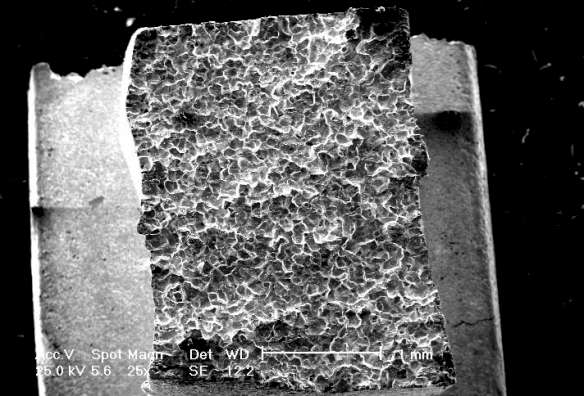
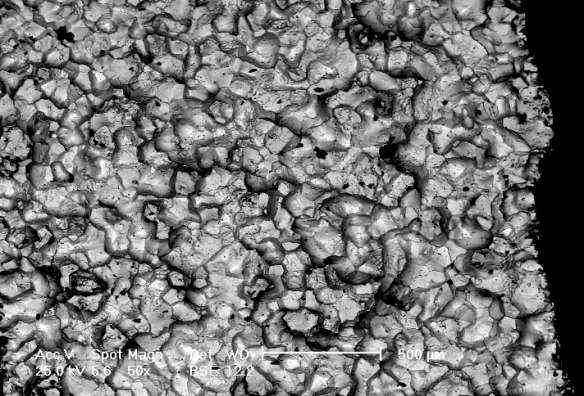
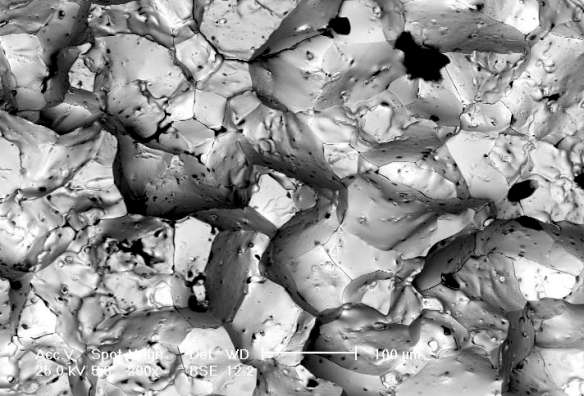
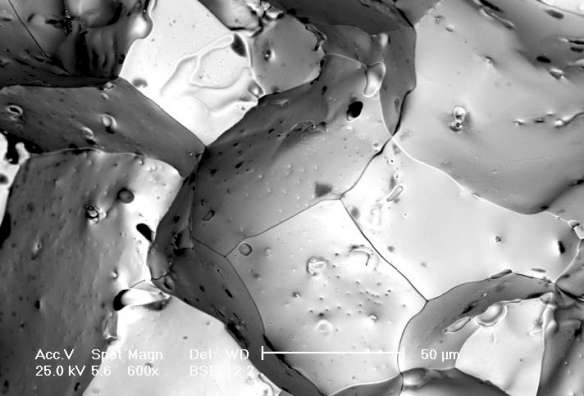
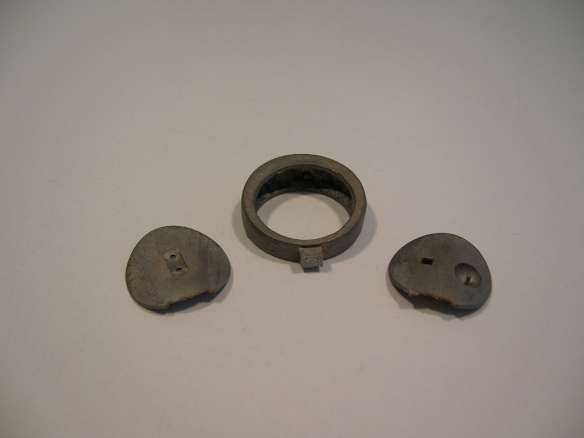
Analyzed items are the result of the investment casting processes made by centrifugal machine, where an alloy containing also scraps was used. Reuse of scraps involves the presence of impurities and oxides inside the alloy.
Such elements could increase the trend to segregation of alloy's elements, helping this way a longer life of intergranular liquid. The heavy stress imposed by the big metal's pressure, due to the rotation speed of centrifugal system, can be associated to this as well. So, these two factors increased metal's sensibility to hot tearing phenomena. Even casting systems can suffer this problem when, for example, very elevate overpressures after casting are used.
SOLUTION
To prevent the problem described above, it is important to pay attention when reusing scraps, and in particular:
- Never use scraps in percentages higher than 50%;
- Often refine scraps;
- Carefully clean the scraps through acid or sand blasting;
- Do not reuse tree's main sprue, considered the high concentration of oxides and impurities it contains.
As far as technological problems are concerned, the problem can be fought decreasing metal's pressure, acting on the number of turns per minute of the centrifugal machine, or decreasing the overpressure applied in order to help filling.