SUMMARY
The preparation cycle of the plaster mold, together with the quality of the plaster itself, represents a fundamental factor for the production of objects by investment casting characterized by a high surface quality and free of surface inclusions.
PROBLEM
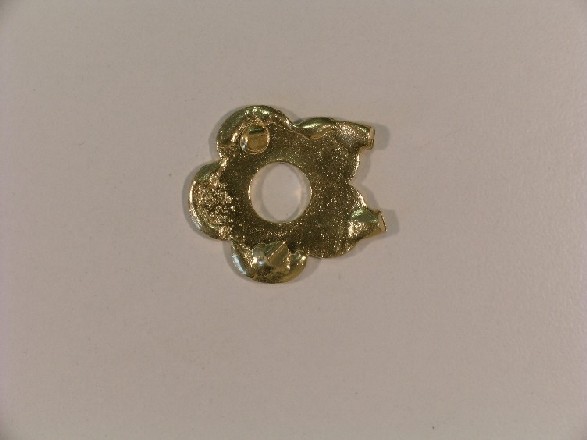
In the case under consideration, a surface porosity was found on 18 ct white gold pieces produced by investment casting and centrifugal casting. Micro-analyses were carried out on some samples sent by the customer, which allowed us to make observations on the type of porosity: in fact, it had a rather irregular shape and was spread completely randomly on the surface of the piece.
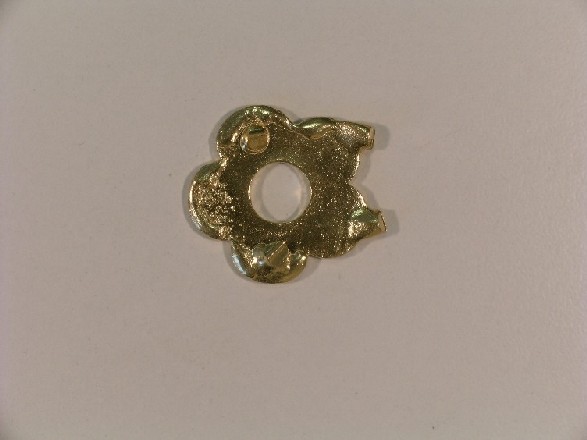
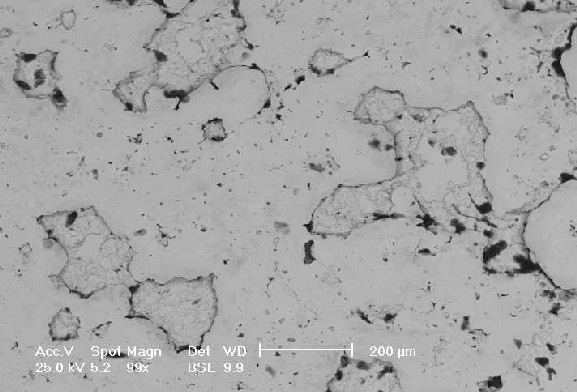
An in-depth interview with the customer in question allowed us to ascertain that he put the cylinders in the furnace immediately after their preparation, without waiting for the time necessary for the plaster to stabilize, i.e. about 1-1.5 h. Given the shape and arrangement of the defect, it was concluded that the problem was likely due to the plaster, in particular its preparation cycle rather than its date of manufacture or quality. In fact, if the gypsum has not reached its optimal characteristics, it is much more prone to problems such as abrasions and/or inclusions, especially if it is used in centrifugal casting processes: this is because in this type of casting the high casting speed imposes a strong stress on the plaster itself, which risks crumbling.
SOLUTION
To avoid this type of problem, it is good to prepare the plaster in the best possible way, carefully following the supplier's instructions. In particular, it is of fundamental importance to respect:
- mixing times;
- the quantitative relationship between water and gypsum;
- the outgassing times;
- the gypsum manufacturer's suggested calcination times and temperatures.