SUMMARY
Sometimes investment inclusions are caused by different factors that, combined, lead to the appearance of evident surface irregularities. For this reason, it is fundamental to pay close attention to each phase of the investment casting process, starting from the production of wax patterns.
PROBLEM
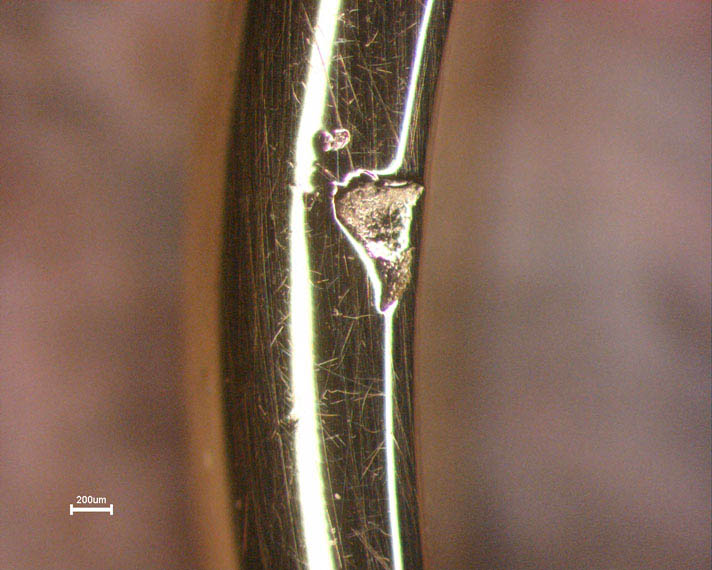
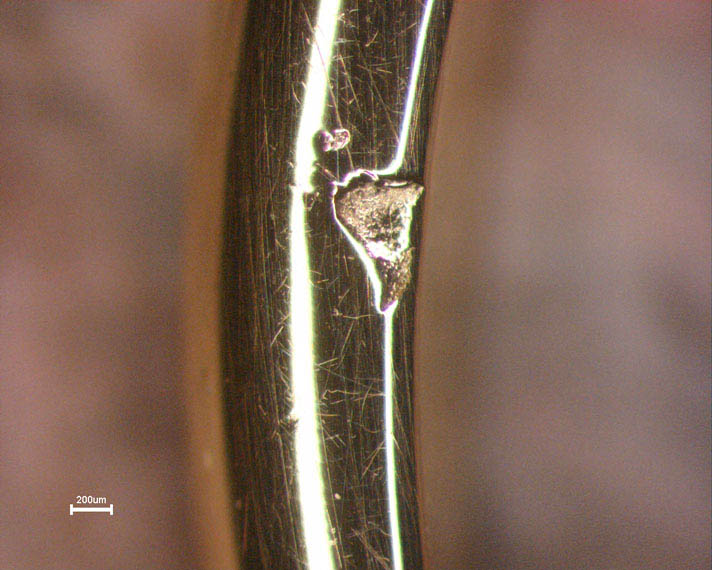
Some 18 ct yellow gold samples are taken into account: they display several surface defects clearly visible to the naked eye. These defects, at higher magnifications, look like inclusions of a squared and irregular shape (first two pictures).
.
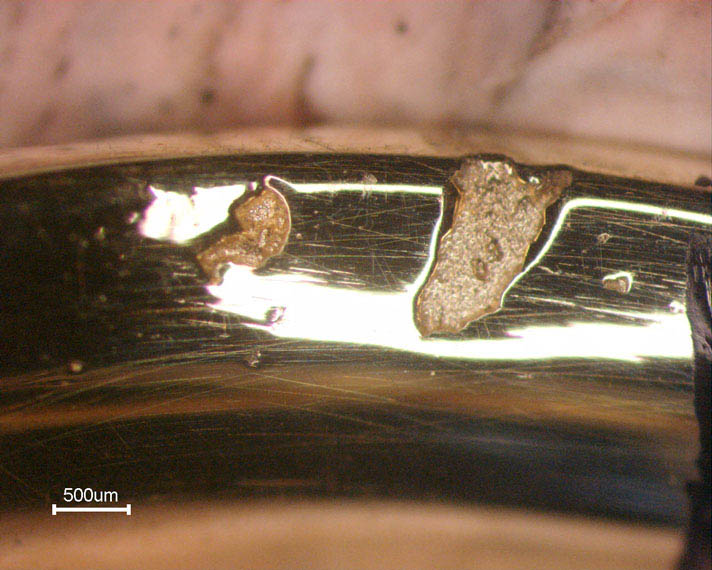
Experience says that irregular defects characterized by the presence of sharp edges like those shown on reported Figures are imputable to investment problems. In particular, they take shape when the molten metal flux is able to detach some more or less big investment particles from the mold and include them inside. These particles, due to their low density, tend to place by the surface, forming the typical defects above described.
The possible causes of the investment defects are traceable back to the used investment or wax patterns. If the investment does not have sufficient mechanical properties (due to a burnout cycle that did not allow it obtaining them, or since it lost them because too old or stocked in a wrong way), it may easily get scaled during casting and cause inclusion problems. Also if the wax patterns display "weak areas" (such as sharp edges), they be easily detached by the molten metal flux and dragged into the cast in the shape of investment inclusions.
SOLUTION
To solve this kind of problem it is necessary to pay close attention to use investment with high mechanical properties (obtainable by means of a proper burnout cycle and suitable storage conditions). In addition, it is recommendable to:
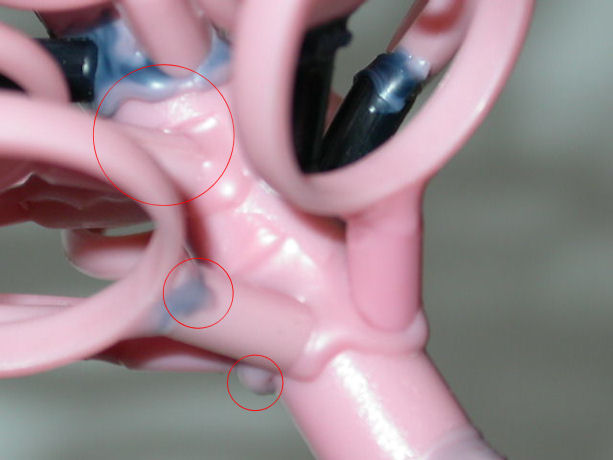
- Carefully check the trees before proceeding with the flasks preparation (it is necessary to use wax patterns with smooth surfaces without bulges, that may generate, in a second moment, thin investment sections easy to detach from the mold);
- A clear example of defective soldering area is represented in the last figure: the joints between the riser and the wax patterns, instead of being smooth and regular, display some bulges and irregularities that may easily get damaged by the molten metal flux as above described.