SUMMARY
The proper use of the pickling solution is fundamental to avoid unpleasant nuisances after casting: for example exhausted acid solutions or too long times of permanence of the items inside the solution may lead to a surface color change.
PROBLEM
In the case examined some 18 ct red gold samples produced by investment casting were affected by surface stains of a lighter color verging on yellow.
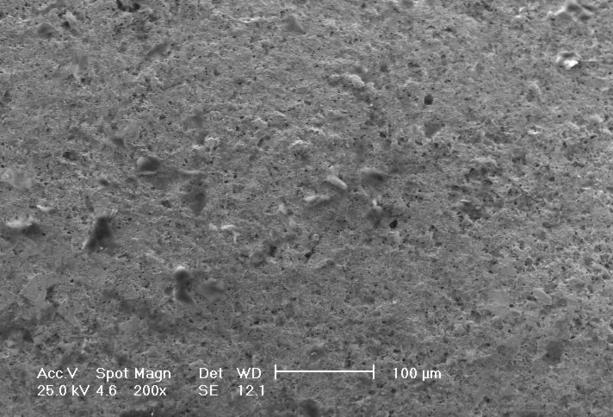
A SEM observation on the surfaces that sustained the color change outlined an irregular and rough surface like that shown on the first Figure. The chemical composition of those areas was slightly different from the nominal composition: in fact, high concentrations of gold and silver were outlined, to the detriment of copper (Second image).
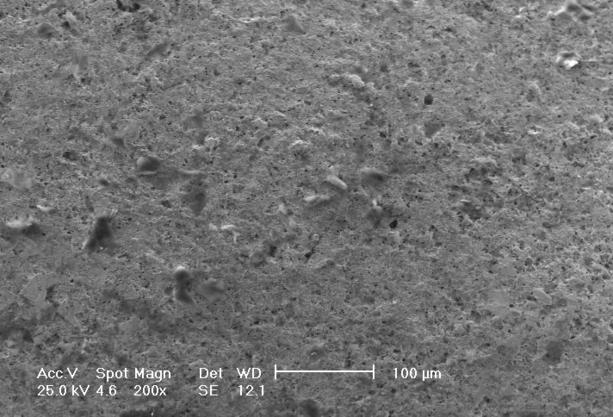
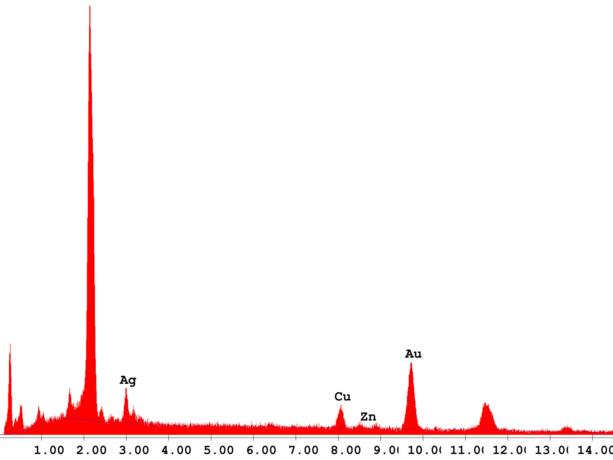
A stain was polished by means of a #400 grain (particle) size paper, that made the original color of the piece come to the surface. Then the polished area sustained a comparative microanalysis, that individuated a composition very close to the nominal composition.
Therefore, it was clear that the color change had been caused by a problem during the acid pickling step. In particular, the hypothesis was that a preferential stripping of copper occurred during the immersion of the piece in the acid solution, that left a surface layer rich in gold and then yellow colored.
This kind of problem rises due to the fact that when an alloy rich in copper is cast, it is easy to get some oxidation (and, in particular, the formation of copper oxide). During acid pickling, the solution preferentially strips copper oxide, then the surface verges on yellow, as at a surface scale there is a higher concentration of gold. Actually, in the case at issue the polished surfaces revealed the classic red gold of the alloy examined and this confirmed the hypothesis made.
SOLUTION
Usually, the color change affects the surface (some µm) only and it is easily removed in polishing. Anyway, to avoid this kind of problem it is important to:
- Check that the pickling solution is not saturated;
- Check that there are no pieces forgotten inside the solution;
- Check the use temperatures: if they are too high a metal-investment reaction may occur, with consequent oxidation of the material;
- Try to reduce the pickling time. In fact, we think that, in alloys rich in copper, too long times of stay in the pickling solution may lead to a surface reaction between the alloy and the acid.