SUMMARY
Among the several variables of investment casting processes, certainly the type of gating system used plays a fundamental role. Abrupt section changes, necks or wrong channels sizing, involve the risk of facing shrinkage defects – luckily eliminable by adopting some simple devices.
PROBLEM
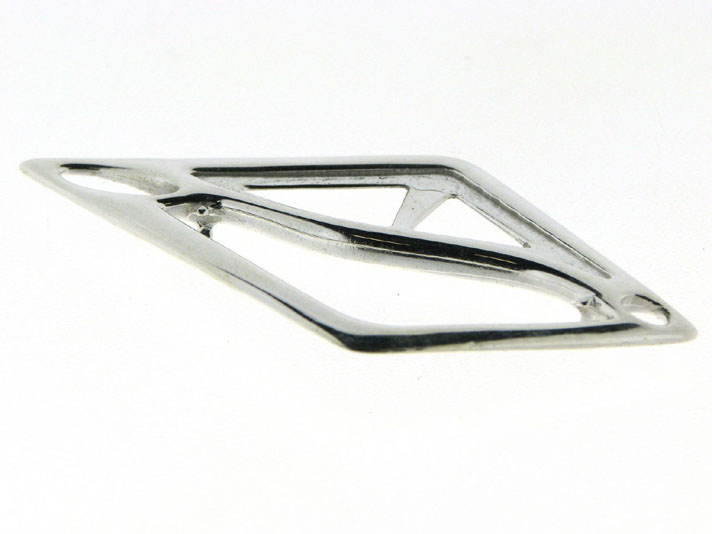
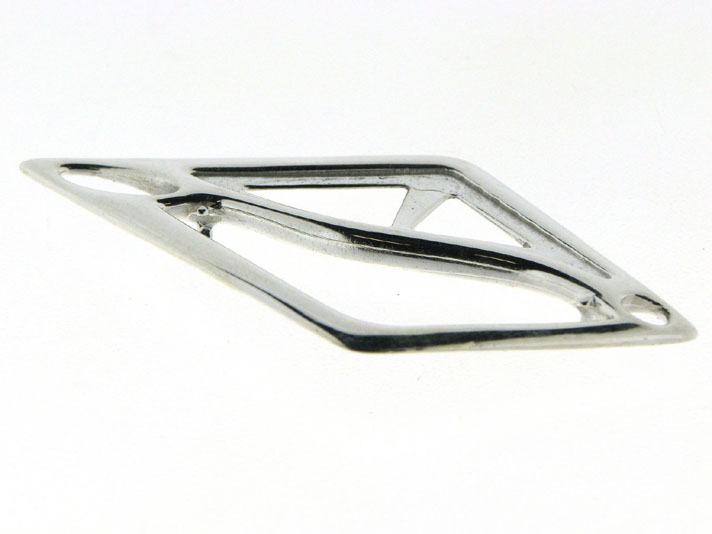
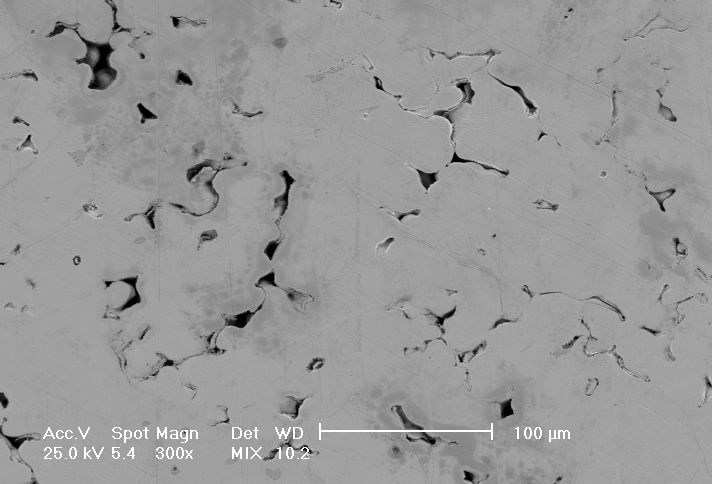
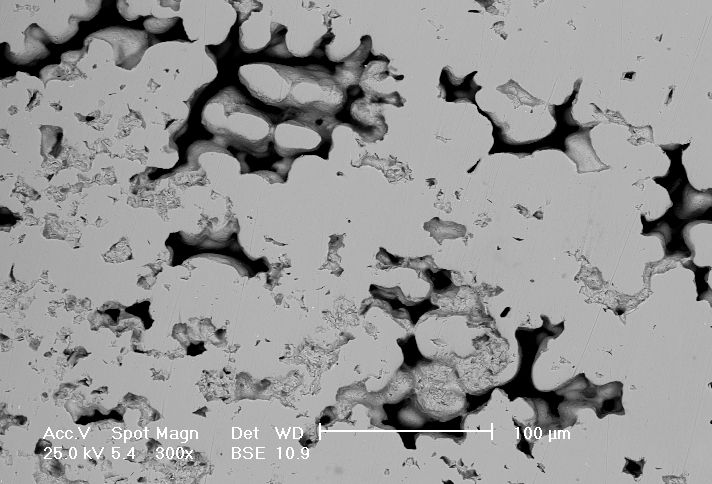
The sample at issue, a 925 silver precious, was affected by small superficial defects close to the area where the feeder was placed (First photo). We carried out an analysis by means of the electron microscope, which allowed us state that the superficial defects were, in reality, porosities with an irregular and typically dendritic morphology.
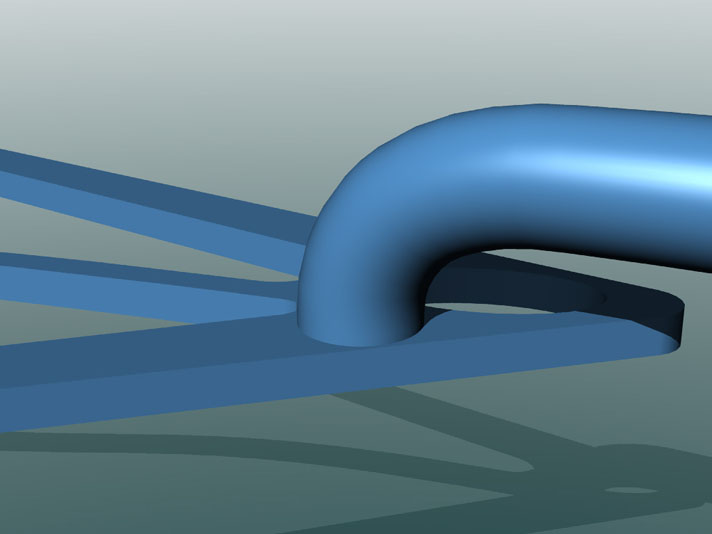
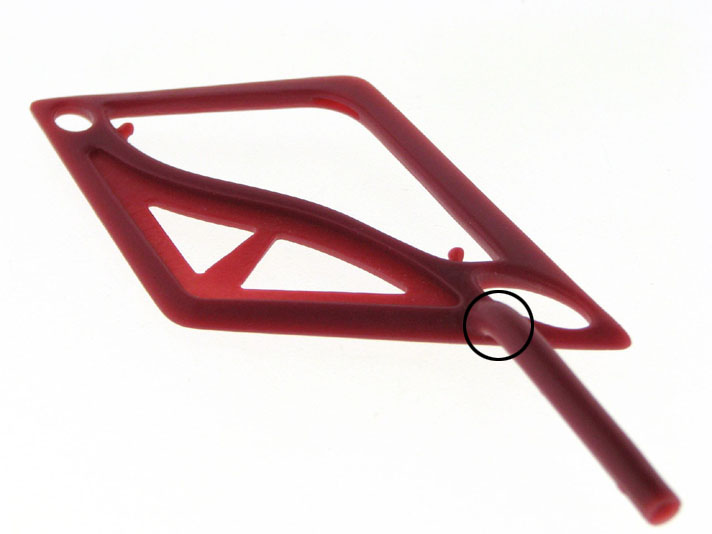
Afterwards, we carried out a study on the type of gating system applied, to better understand the origin of those shrinkage porosities. Observing the wax patterns, we could notice that they displayed a neck close to the joint between the item and the feeding channel (Next photo). Such a neck may be prejudicial to the thermodynamic working of the gating system, generating a section which solidifies before the complete solidification of the item. This does not allow the filling with some further molten metal which would compensate for the natural shrinkage of the material during its liquid to solid transformation. This mechanism may explain the defect at issue.
SOLUTION
To solve this kind of problem, it is advisable to:
- Use feeders with a constant and cylindrical section;
- Prefer feeders whose section is equal to the section of the items they feed;
- In case, decrease the projection of the samples on the plane, by assembling it vertically or flag-like onto the tree.