SUMMARY
The use temperatures, gating system and size of the feeders are fundamental elements for the production of high quality manufactured items. If they are not right and in perfect harmony among them (thermodynamic equilibrium), problem like shrinkage porosity may easily rise, like in the case examined.
PROBLEM
Some 18 ct yellow gold displaying defects spread all over their surfaces are examined.
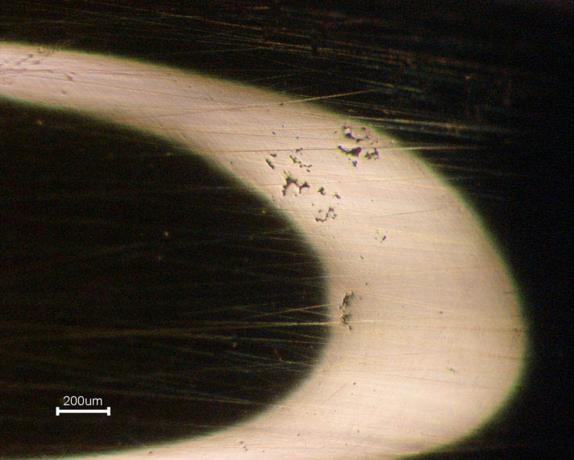
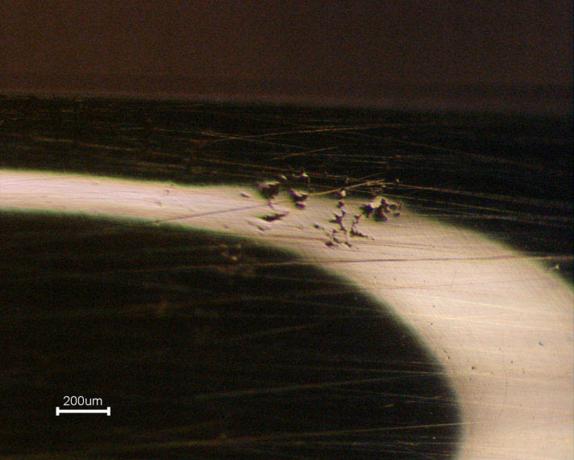
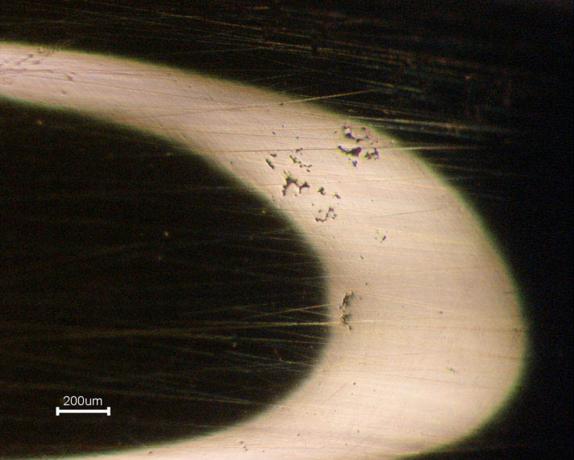
The defects at issue consist in cavities of oblong and irregular shape, with the presence of dendrites inside. Experience says that this kind of morphology is typical of shrinkage defects.
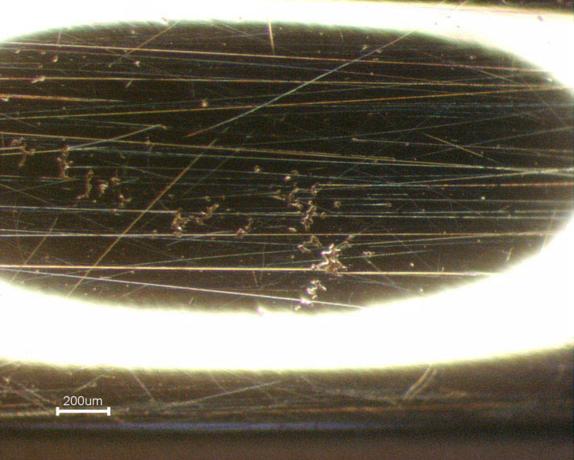
Shrinkage porosity appears during solidification phase, in particular when in the item there are liquid areas completely surrounded by solid zones. In fact, when this situation occurs, the last liquid zones that solidify decrease their volume, requiring more material that is not available, since round everything is solid. Then the shrinkage porosity appears, due to this contraction of material.
SOLUTION
Usually, shrinkage porosity can be reduced/eliminated by means of a study on the ingate or finding the ideal thermodynamic conditions (casting temperature - flasks temperature) for the solidification of the items. In addition, the ideal would be that the last part of the material that solidifies is the feeder, because in this way the porosity can concentrate out of the items.
Therefore, to avoid this kind of problem, it is suggested to check the gating system used and, in case, modify the use temperatures. Therefore, it is recommendable to:
- try and feed the pieces with some alternative systems, e.g. in the case of rings using V-shaped gates, so to supply the material from more than one spot and reduce the risk that the shrinkage phenomenon occurs;
- use more feeders in case thin sections are close to thick sections;
- check also the diameter of the used feeders (the general rule says that the diameter of the feeder is equal to the section of the piece it is feeding);
- it is difficult to define a universal rule about the use temperatures to reduce shrinkage porosity, but generally speaking the use of high flasks temperatures and low casting temperatures is preferable.