SUMMARY
A determining element for the obtainment of good results in investment casting is temperature. In fact, if it is too low it can negatively influence the natural shrinkage of the material during solidification phase, by generating the appearance of more or less evident defects. But, at the same time, if it is too high it may cause some other defects, such as the gas porosity.
PROBLEM
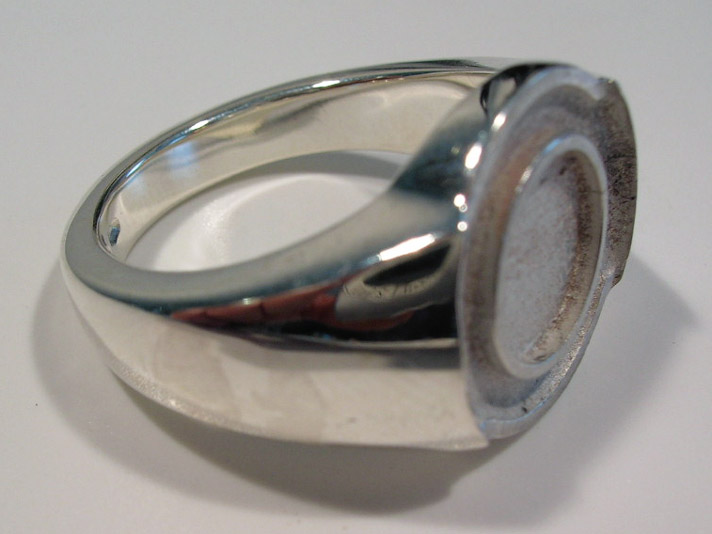
The sample at issue was a 925 silver ring. On its surfaces, some stains were visible with the naked eye. The use of a lens showed that they were actually small holes spread all over the item's surface.
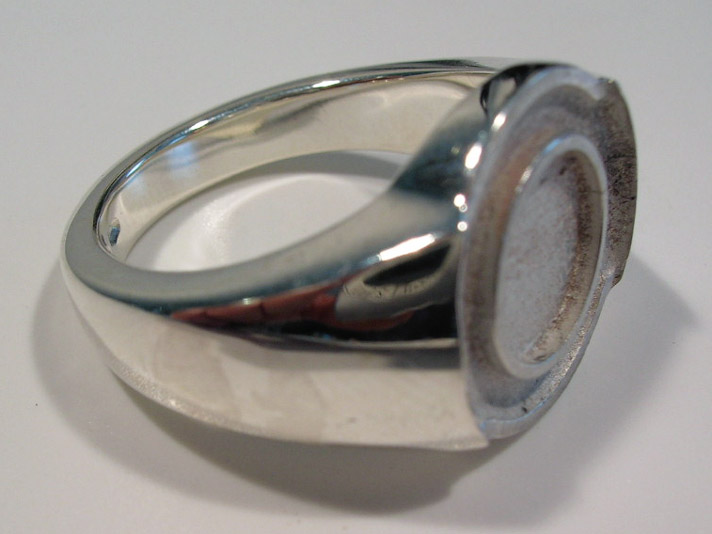
We carried out a first eye-observation on the ring and we discovered that the defects were spread all over the surface, but particularly concentrated on the massive areas where the feeders were previously placed. Afterwards, we could observe, by means of the scanning electron microscope, that the cavities were irregular, with a dendritic structure, typical of the shrinkage defects (Next 4 photos).
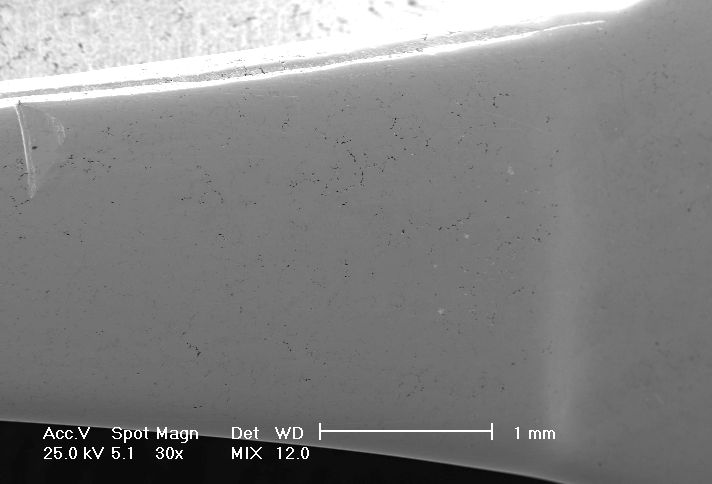
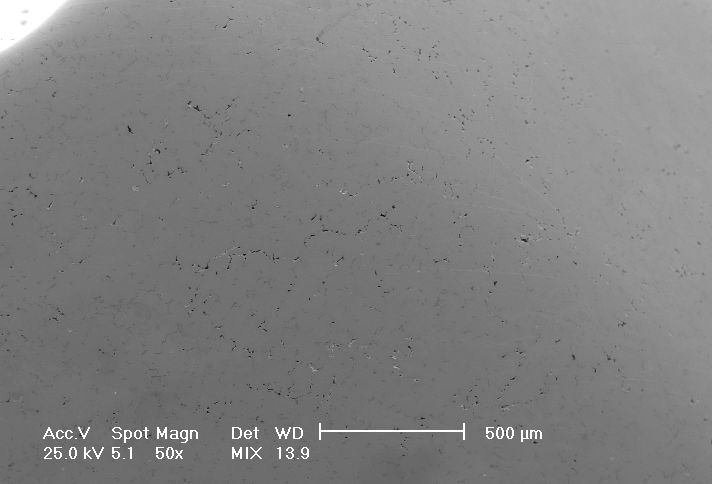
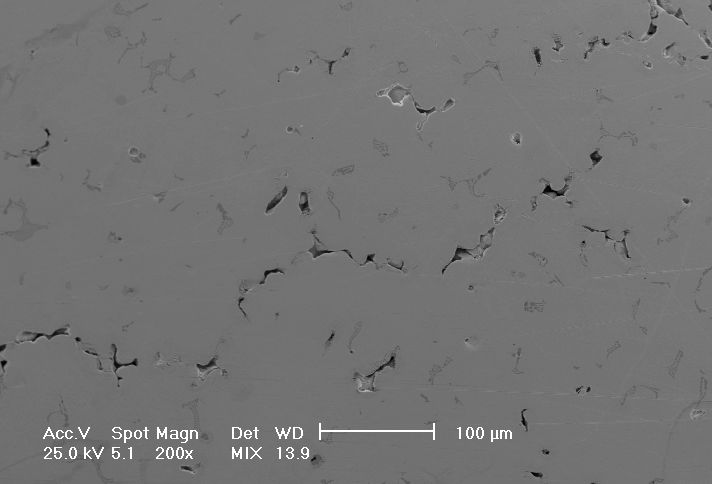
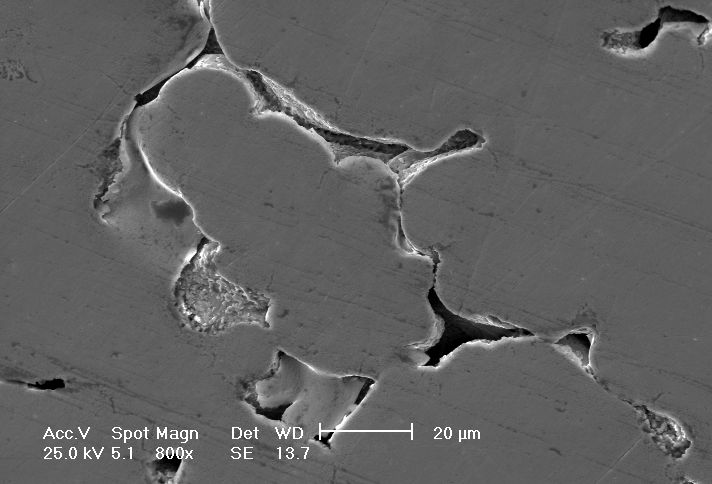
Then, we concluded that it could be a matter of shrinkage porosity, i.e. cavities due to the shrinkage of material during its solidification inside the investment mould. This kind of defects is very common and it is mainly influenced by two parameters: the gating system applied to the tree and the pouring and mould temperature.
SOLUTION
Following suggestions can help in case a problem, similar to that above described, occurred:
- Check the positioning and sizing of the feeders applied to the items (for example, we remind that the feeder section should be equal to the section of the item where it is positioned, but the variables to take into consideration are several);
- Check if the casting temperature is suitable for the alloy you intend to cast (it is right norm to keep it as low as you can, possible shrinkage defects permitting); In case, it is advisable to carry out some tests with casting temperatures 50°C different one to each other as well;
- Finally, it is possible to sharpen the ideal flask temperature, by carrying out further tests inside the temperature range where the defects are less present.