SUMMARY
This case took into consideration some investigations and observations made on a 925 Silver alloy, which at the end of the continuous casting left solid residuals on the crucible bottom.
PROBLEM
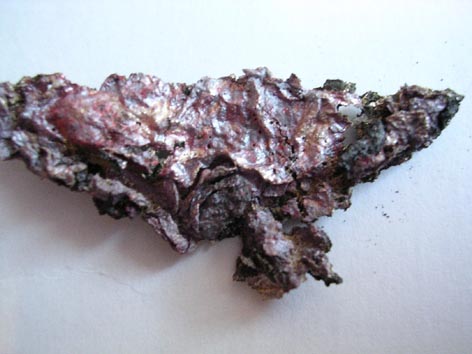
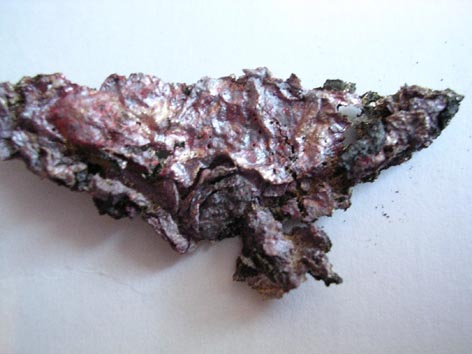
The problem was related to some solid residuals of scraps on the crucible bottom, as it can be seen in the first Picture. Such residuals might take the place of the ingates, the wholes of the die of the continuous casting and cause their occlusion. These residuals were mostly connected to the kind of crucible used, to the life of the crucible, to the fact that the metal had remained for a long while at high temperatures inside the casting machine, which made possible that also the bar of the continuous casting machine released, in some way, quantities of Iron and most of all to a very imprecise protection of the molten metal during the continuous casting process.
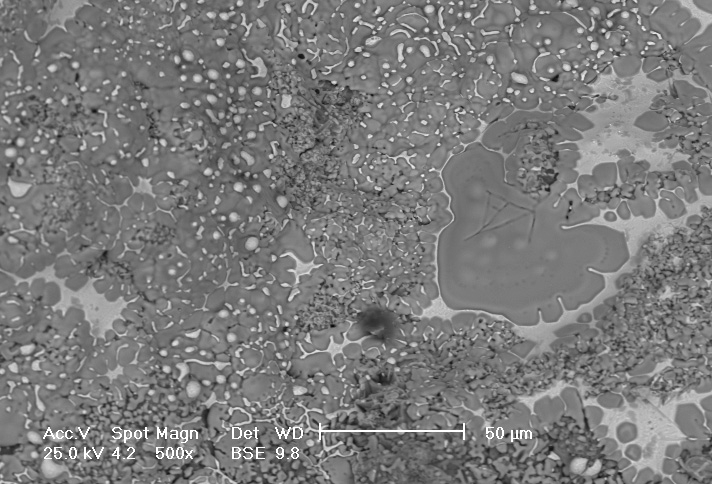
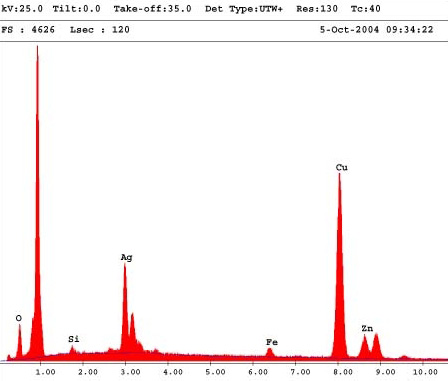
As you can very well see by the composition of the points analyzed in the second Picture, it can be noticed how the percentage of concentration of Oxygen turns out to be high and as a consequence it can be presumed that oxides formed due to wrong and imprecise protection of the molten metal.
SOLUTION
- Keep always the double action, in the continuous casting on the surface of the metal, of a reducing flame to protect the bath from the Oxygen attack or either an insufflation of Nitrogen, a mixture of Hydrogen and Nitrogen or Argon that might work as a prevention of oxidation which may form among Copper and Zinc or Oxygen.
- Try and reduce the more the possible the time of permanence at the molten.
- Should the alloy not be completely taken out the continuous casting, it can be advisable to take precautions avoiding that when the metal is still at the liquid state, the protection of the molten metal is missing. As a consequence once the casting ends, it is suggested not to switch everything off, or better the flame could be extinguished since the beginning but the insufflation of gas should be left until the whole lot gets to cooling.