SUMMARY
To obtain 925 silver items it is fundamental, above all, to have a high superficial quality before changing to the silver-plating phase. Such galvanic process in fact, allows you to deposit a thin silver layer onto the surface, this last one though is not enough coating to hide any possible imperfection.
PROBLEM
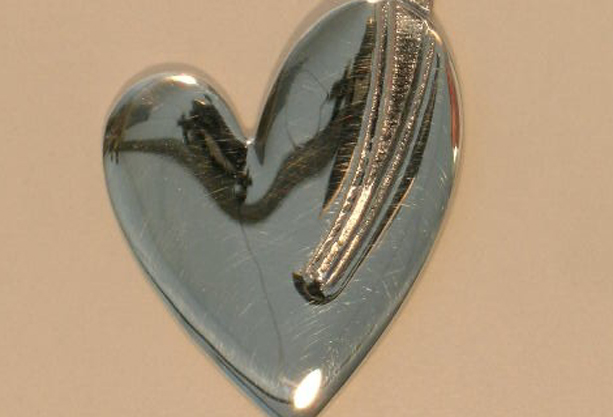
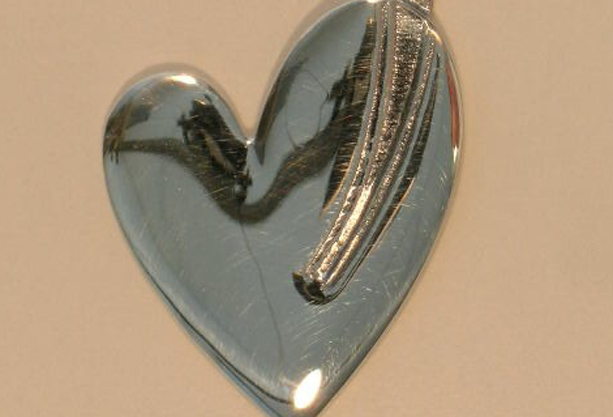
In the case at issue was examined a 925 silver item which presented a rather low quality surface: it was, in fact, marked by several scratches and porosities (as you can see in the first two figures).
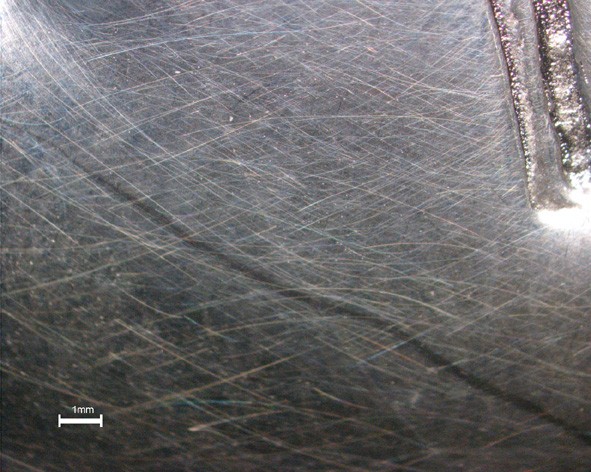
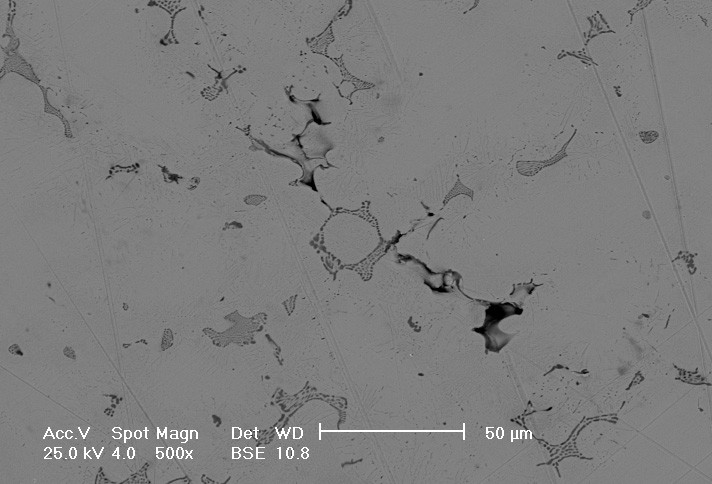
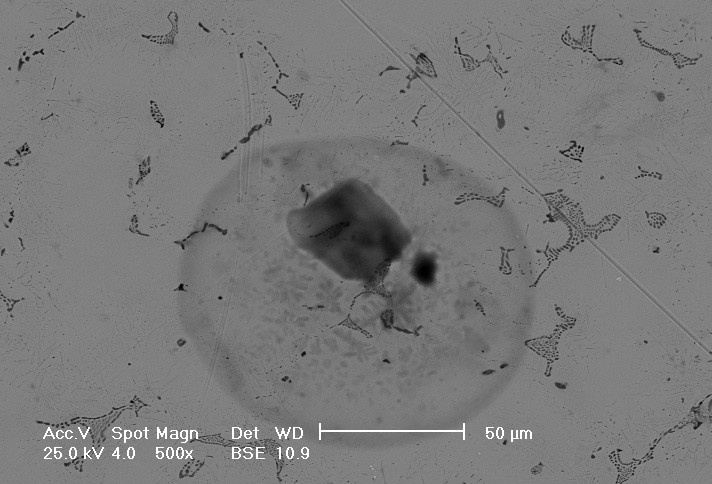
By the analysis made (see the last two figure), it was found that this can be due to a superficial quality which was not enough good before the galvanic process. In fact, silver-plating does not let you to deposit on the item a covering layer, but a thin alloy's layer repeating exactly the superficial profile of the item itself. Moreover, in some porosity were stuck some abrasive particles: some of them, moved by the brushes during the polishing phase, might have provoked further scratches.
SOLUTION
Since silver-plating does not allow you to cover possible imperfections, it is necessary to make sure that the surfaces are high quality ones before passing to such process. For this reason, we suggest you to:
- reduce, as much as possible, the probable superficial porosities, paying attention to make an extreme ultrasounds pickling and a drying in the furnace, before passing to the galvanic. This is aimed to in order to remove completely the liquid possibly entrapped inside the pores
- use high quality abrasives, for not damaging the item's surface
- carefully polish by sand-papering reaching at least 1200 dpi, for the surface to display a high superficial quality before the silver-plating
- carry out, when possible, an annealing heat treatment, in order to make the surface more resistant to the polishing phases.