SUMMARY
During the soldering steps it is a general practice to keep together the two or more elements to solder using some metallic strings. These can be made of different sorts of metals or alloys. It happens sometimes though, that these strings might solder to the pieces producing an undesired effect which requires further working steps to remove them from the pieces themselves once these very last ones are soldered.
PROBLEM
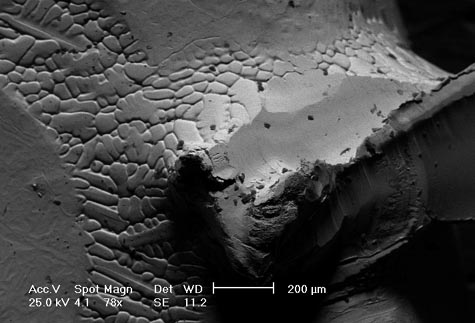
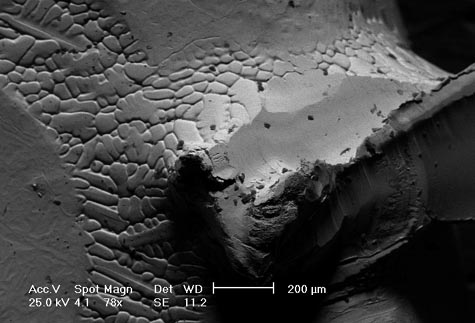
The problem is born when the nature of the metals in contact, in this specific case the pieces to be soldered and the metallic "strings" , are similar and therefore tend to create alloys among each others and spread one into the others. In fact, both the materials tend to join thanks to the diffusion phenomena which, through the high temperatures reached during the soldering phase, it is the cause of the growth of surface micro-bindings between the "strings" and the pieces; such micro-bindings are so strong that the pieces are joint in a very resistant way. The picture displays the surface of a piece after removing the "string" that got stuck on it.
SOLUTION
The things to keep into very close consideration are the following:
- Avoid using "strings" made of Copper or Brass.
- Avoid using "strings" of common steel (commonly called Iron) if the temperatures of the soldering process is over 830°C.
- Use "strings" made of Inox Steel if possible. In fact the Chrome oxide inhibits the diffusion process and therefore the "gluing" of the materials.