SUMMARY
Heat treatments can be of fundamental importance, even after investment casting operations carried out in order to homogenize the metal's composition and microstructure. In this way, it is possible to reduce or even to avoid brittleness problems after deformation of small entity as well carried out on some parts of the cast.
PROBLEM
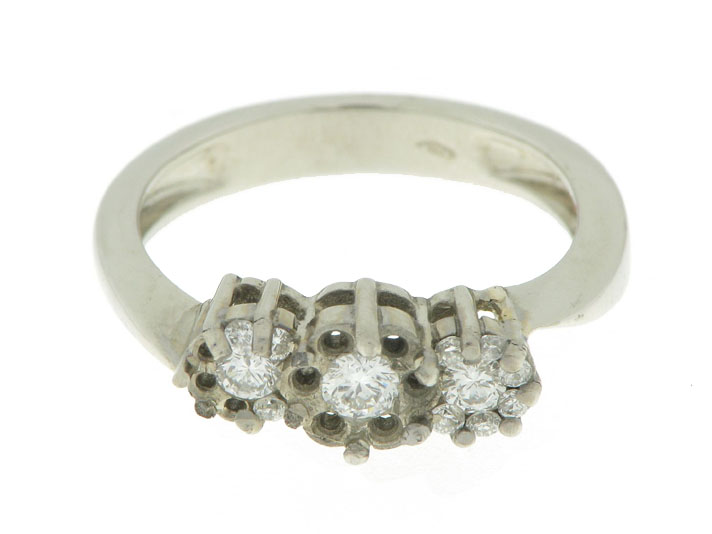
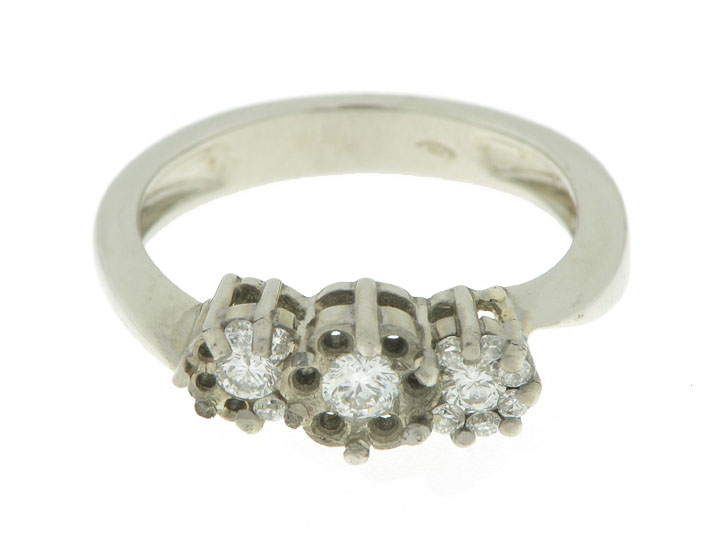
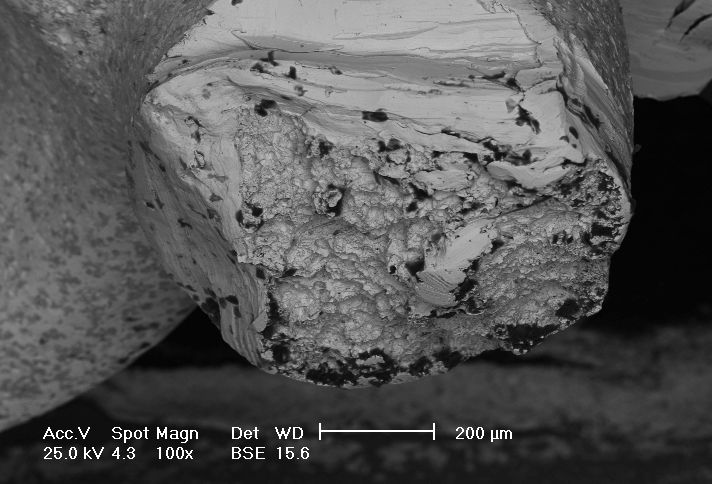
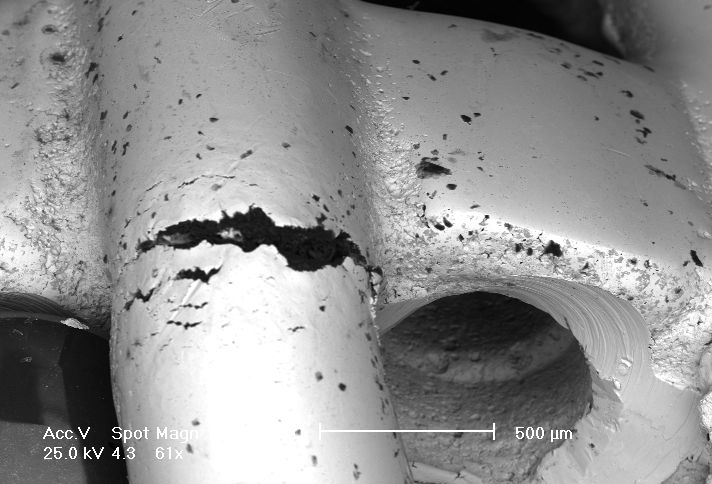
Even items come from investment casting can display brittleness in case their shape had to be modified. An exemplary case is represented by prongs' bending for placing the stones on items, or a ring's size change. These operations can be critical, especially in case of particular colours or compositions. 18 ct white gold at high Nickel content may cause, in fact, some problems when suffering this kind of workings. In the case at issue, for example, claws' bending phase was impeded by the fact that prongs were extremely weak. In the deformation area some fragile fractures or cracks took place, precluding this kind of operations.
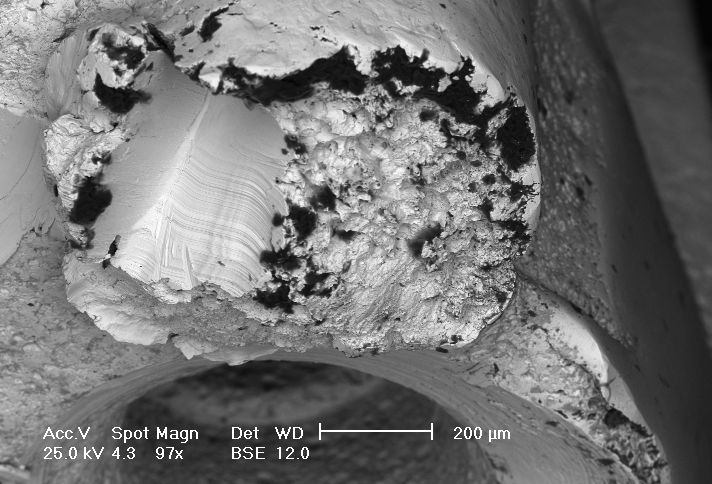
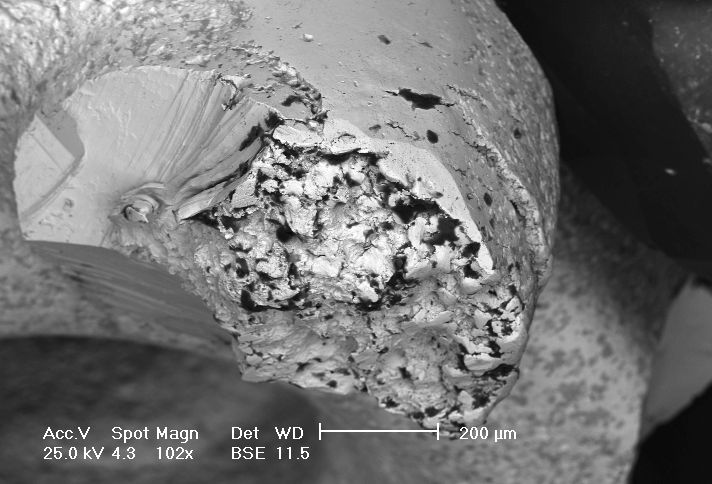
The observation at high magnifications of the fracture areas outlined that such phenomenon took place because of some residual tensions of the material after flask's quenching and of segregation phenomena of hard and brittle intermetallic.
SOLUTION
To avoid this kind of problem, besides the use of materials with elevate mechanical resistance (such as alloys containing grain refiner), solubilisation heat treatment practices can be used. This kind of treatment is able to release the residual tensions and to solubilise the possible intermetallic phases which may have formed up due to the slow cooling after casting. A heat treatment carried out at a temperature and for a time correct allows to restore the best possible mechanical features and to avoid items' breaking.