SUMMARY
The homogeneity and purity of the composition of the materials used are fundamental factors in order not to face problems during production, especially when objects have to be subjected to acid baths. If the alloy is not perfectly homogeneous or there are impurities in it, localized corrosion or surface color changes can occur.
PROBLEM
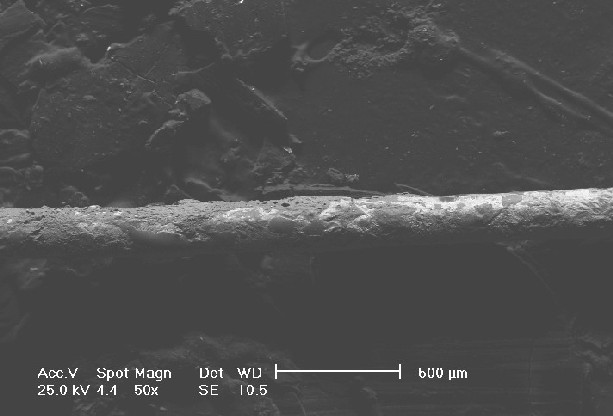
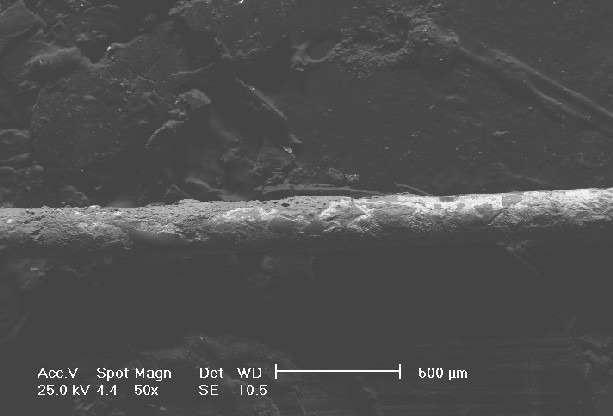
In the case under consideration, there were phenomena of localized corrosion and color change in an 18 ct white gold alloy. This was done as a result of an acid pickling process carried out to remove the oxide layer formed after the annealing heat treatment on a wire of this material. During the passage in acid, stains of different colors formed and subsequently, in correspondence with these stains, an evident surface corrosion was noted.
From the analyses carried out on the surface and on the section of the sample provided to us by the customer two types of problems emerged:
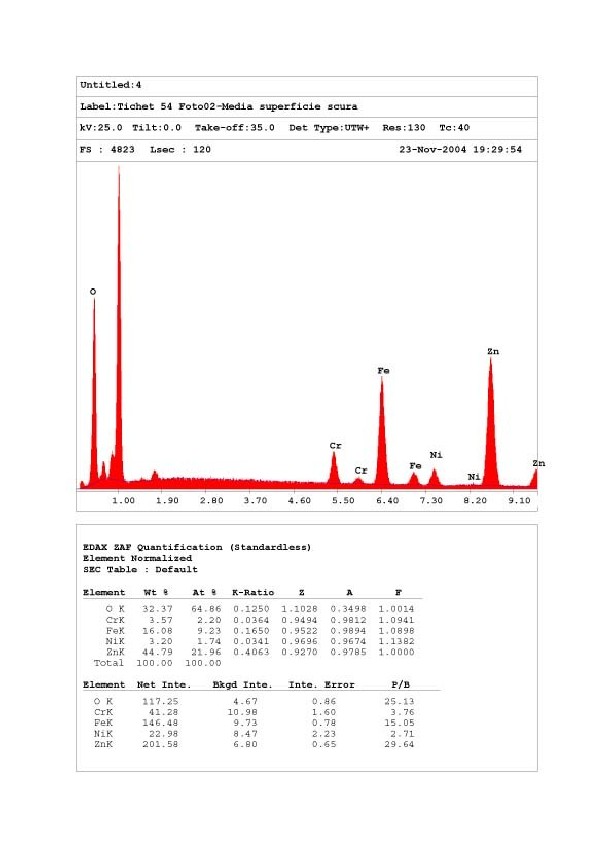
- presence of oxides and impurities: micro-analyses carried out on the surface have revealed rather high values of zinc, chromium, iron and oxygen in the alloy; These elements, not being present in the mother alloy, derive from external pollution and, given the large amount of oxygen, it is assumed that they were found in the form of oxides and not elements. After further analysis, their presence was detected not only at the surface level, but also in the section of these elements: it can therefore be assumed that the alloy was contaminated during processing, probably due to the use of inadequately cleaned tools or too much waste.
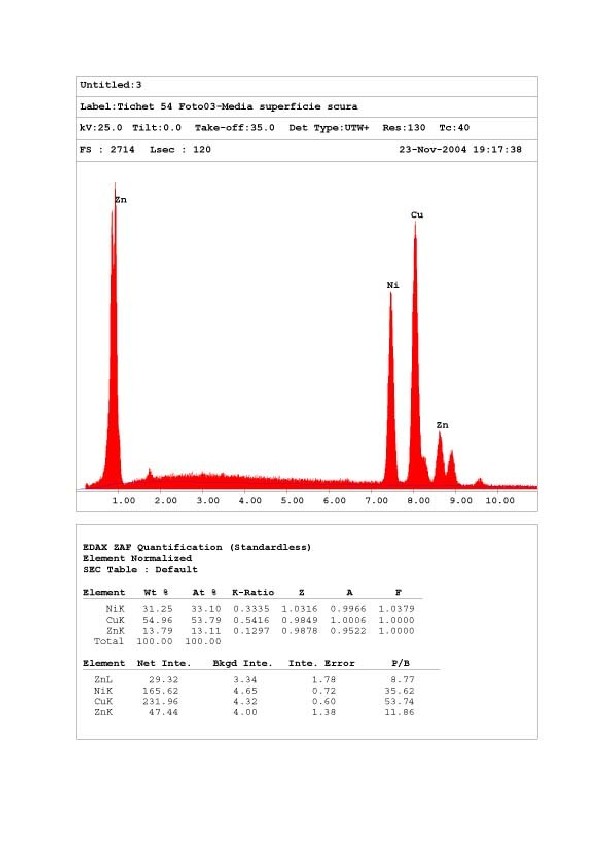
- areas characterized by a strong inhomogeneity, areas in which there were high percentages of zinc and copper alternating with areas almost devoid of these elements. Since during the acid bath the solution attacks more strongly the areas that have less resistance to acids (i.e. those in which less noble metals are found, such as copper and zinc, or oxides), it has happened that the "weaker" areas have undergone a greater attack with the consequent removal of some elements and subsequent change of color, while in the most serious cases even a beginning of corrosion.
SOLUTION
To prevent the onset of this type of problem, it is important to pay close attention to the use of scrap material and the homogeneity of the alloy:
- always use the lowest possible percentage of scrap, preferably between 30 and 50%
- completely renew the metal through refining at a certain frequency, calculated based on your own consumption
- ensure that the metal, at the time of pouring, is completely molten and homogeneous: this is possible by pouring at a high temperature, about 100°C above the liquidus, and thoroughly stirring the metal in the crucible (the use of a graphite stirrer is recommended if necessary).