SUMMARY
Embrittlement and breakage of an object are problems often related to the mechanical performance of metals. For an alloy to achieve the highest level of performance, forming operations and heat treatments are essential. If this is not done correctly, the material limits are lowered and processing is more difficult.
PROBLEM
The case under consideration relates to the production of 14-carat white gold springs. In particular, the customer could not achieve high elasticity even after hardening at different temperatures and for a long time. Not even the addition of cobalt (an element traditionally used to increase the hardness of gold alloys) had any effect on the mechanical properties of the alloy.
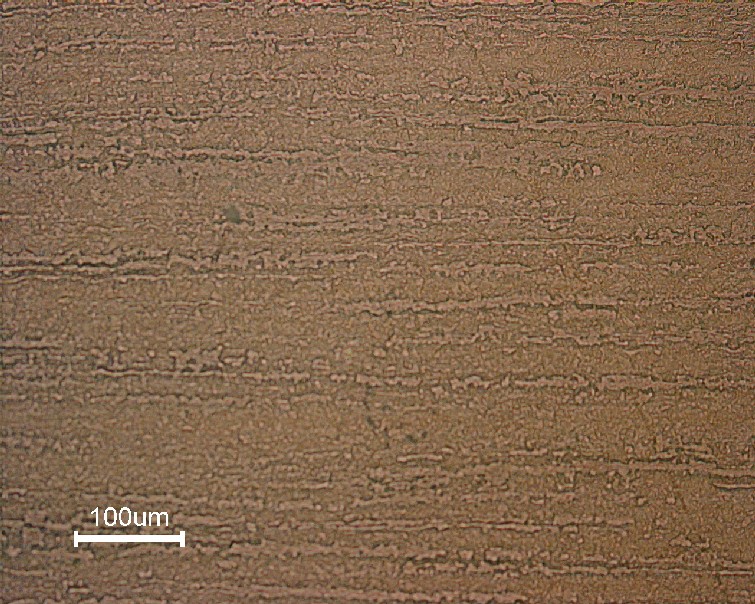
Preliminary chemical analyses of the alloy composition ensured a composition suitable for thermal hardening processes. Following these analyses, metallographic attacks and observations on the microcrystalline structure were made on the samples sent by the customer.
Observation of the structure highlighted the fact that the grain had not fully formed following recrystallization annealing. This can happen for two reasons: incorrect annealing parameters, insufficiently hardened annealed material. In the event that the material is not in the annealed state, it is not possible to harden it, not even by leaving the piece at the appropriate temperature in the furnace for a considerably long time, since the piece still lacks the fundamental physical conditions for the treatment to be successful.
SOLUTION
To be sure to obtain the highest performance values of a material, it is good to:
- deform it sufficiently (i.e. between 70 and 90%)
- Carry out the annealing correctly following the technical instructions of the material
- Carry out the hardening by carefully following the instructions on the technical data sheet